
 Save to Pinterest
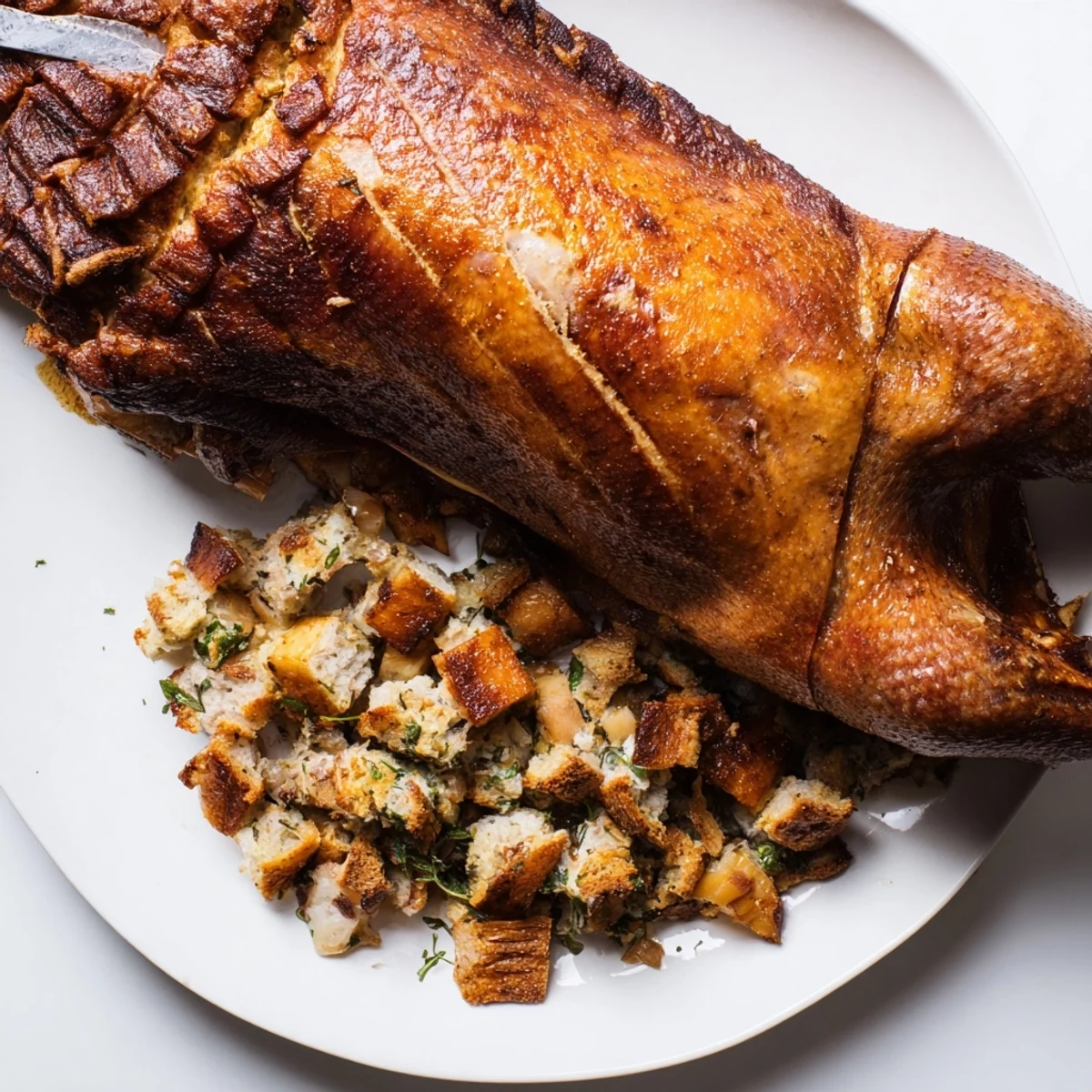
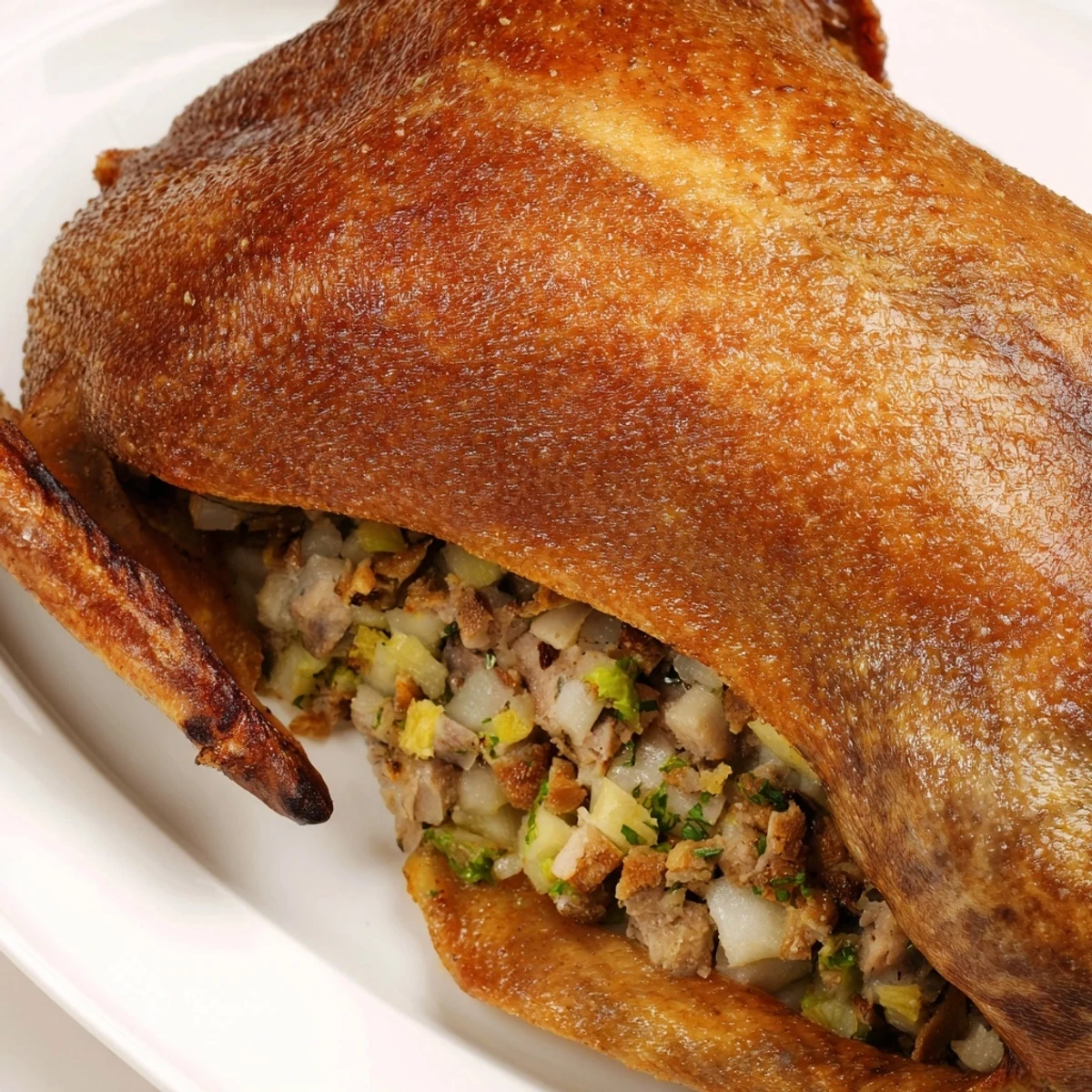
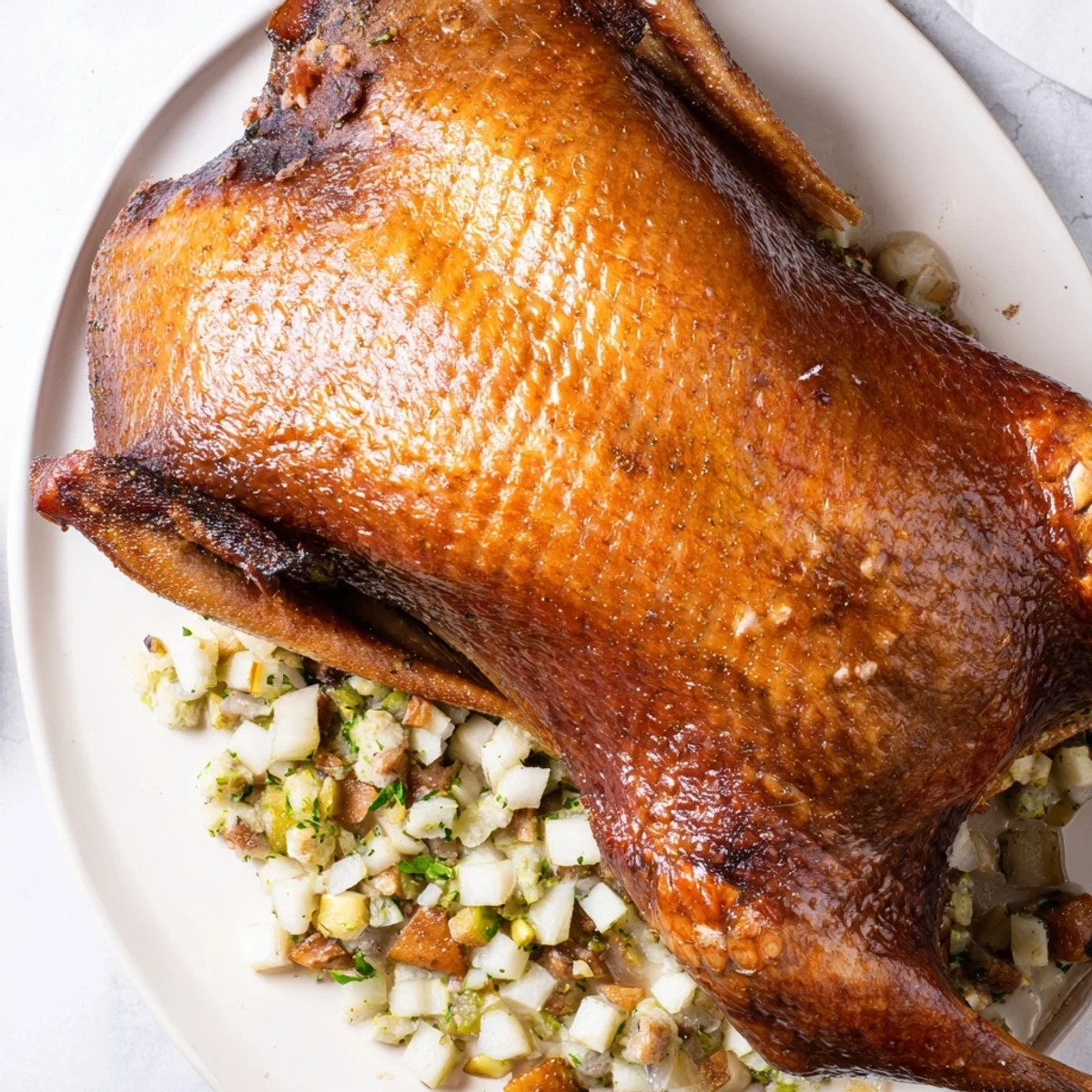
 This dish features a whole goose seasoned and roasted to achieve irresistibly crispy skin. The cavity is filled with a flavorful herb stuffing made from bread, fresh herbs, apples, and aromatic spices, enhancing the rich poultry meat. The bird is basted regularly to keep it moist and browned to perfection. After roasting, resting the goose allows the juices to redistribute, resulting in a tender and juicy centerpiece. Serve alongside classic sides for an elegant and festive meal.
I'll never forget the year my grandmother first taught me to roast a goose for Christmas Eve. The kitchen filled with the most extraordinary aroma as the fat rendered and the skin turned a deep mahogany gold, and I understood then why this bird had graced festive tables for centuries. There's something about preparing a whole goose that feels ceremonial, purposeful, like you're honoring a tradition that matters. My hands trembled slightly as I basted it for the first time, and she squeezed my shoulder and said, 'This is how we show love at the table.' Now, whenever I roast goose, I'm transported back to that moment.
I made this for my partner's family the first time I met them properly, and I was absolutely terrified. But as that goose came out of the oven, bronzed and gleaming, something shifted. Their faces when they tasted it told me everything. His mother asked for the recipe, his father had seconds, and suddenly I wasn't the nervous girlfriend anymore—I was the one who made 'that incredible goose.' Food has a way of doing that, of saying things words cannot.
Ingredients
- 1 whole goose (4–5 kg), giblets removed: This is the star. A good goose will have more fat than chicken or turkey, which is exactly what we want for that crackling skin. Ask your butcher for a bird that's been properly aged if possible.
- 2 tsp kosher salt: Use kosher salt, not table salt, because it distributes more evenly and gives you better seasoning control. I learned this lesson the hard way.
- 1 tsp ground black pepper: Freshly ground is non-negotiable here. It makes all the difference in how the seasoning develops.
- 1 orange, quartered: The citrus brightens the meat from the inside and perfumes the cavity in the most subtle way.
- 1 onion, quartered: Adds depth and helps flavor the meat as it roasts.
- 200 g stale white bread, cut into cubes: Stale bread is essential—fresh bread becomes mushy. Let your bread sit out overnight if you need to.
- 60 g unsalted butter, melted: Unsalted lets you control the seasoning. Melted butter distributes evenly and makes the stuffing tender.
- 1 medium onion, finely chopped: The aromatic base of the stuffing. Don't skip chopping it finely—you want it to disappear into the mixture.
- 2 celery stalks, finely chopped: More aromatics, traditional and essential to good herb stuffing.
- 2 apples, peeled, cored, and diced: A little sweetness that balances the savory herbs. I prefer Granny Smith for their tartness.
- 3 tbsp fresh parsley, chopped: Fresh herbs are critical here. They're what make this stuffing taste alive and bright.
- 2 tbsp fresh sage, chopped: Sage and goose are meant for each other. The herbaceous warmth complements the rich meat.
- 1 tbsp fresh thyme leaves: Adds another layer of subtle earthiness to the mixture.
- 1 tsp dried marjoram: A secret ingredient that brings warmth without being obvious about it.
- 1 egg, lightly beaten: Acts as a binder to hold the stuffing together while it cooks.
- 120 ml chicken stock: Keeps the stuffing moist. You can use vegetable stock if you prefer.
- Salt and pepper, to taste: Always season your stuffing before it goes into the bird.
- 250 ml water: For the roasting pan, which helps create steam and keeps the meat moist.
- Fresh herbs for garnish: A final flourish of thyme or rosemary on the platter reminds everyone what they're eating.
Instructions
- Prepare your oven and goose:
- Start by preheating your oven to 180°C (350°F). While it heats, take your goose out and pat it completely dry with paper towels. This is more important than you might think—any moisture on the skin will prevent crisping. Trim away any excess fat hanging from the neck and cavity. Now season the inside of the goose generously with salt and pepper, getting into the cavity thoroughly. Season the outside just as carefully, thinking about every surface you'll see when it's carved.
- Flavor the cavity:
- Place the quartered orange and onion inside the goose cavity. These won't flavor the meat directly, but they'll perfume it gently from within and contribute subtle sweetness.
- Make the herb stuffing:
- In a large bowl, combine your bread cubes with the melted butter, tossing gently until the bread is evenly coated. Add the finely chopped onion, celery, and diced apples. Scatter in the fresh parsley, sage, and thyme, plus the dried marjoram. Mix everything together gently—you're not trying to break down the bread, just incorporate everything evenly. Pour in the beaten egg and chicken stock, stirring until the mixture is moistened but not wet. Taste it and season with salt and pepper. This stuffing should taste good on its own, because that's what it will taste like inside the goose.
- Stuff the goose:
- Loosely fill the goose cavity with the herb mixture. The key word is loosely—stuffing needs room to expand as it cooks, and if you pack it too tightly, it won't cook through. If you have leftover stuffing, don't waste it; bake it separately in a covered dish for the last hour of roasting. You'll have a textured, crispy version that everyone loves.
- Truss and position:
- Tie the goose's legs together with kitchen twine. Tuck the wings underneath the body so they cook evenly and don't burn. Place the goose breast-side up on a rack in your roasting pan. The rack is important because it allows air to circulate underneath. Pour 250 ml of water into the pan.
- Begin roasting:
- Roast for 2 hours and 30 minutes total. Every 30 to 40 minutes, baste the goose with the pan juices using a basting brush or large spoon. This keeps the skin moist and helps it brown evenly. After about 1 hour of roasting, take a fork and gently prick the skin all over, being careful not to pierce the meat beneath. This is the secret to crackling skin—you're helping the fat render out and escape, leaving behind crispy skin.
- Monitor the browning:
- If the skin is browning too quickly and looks like it might burn, loosely cover the goose with foil. You can remove it for the last 15 minutes to ensure a beautiful color.
- Test for doneness:
- The goose is done when a meat thermometer inserted into the thickest part of the thigh (without touching bone) reads 75°C (165°F). Don't guess on this—a thermometer is your friend and ensures perfectly cooked meat that's not dry.
- Rest and serve:
- Remove the goose from the oven and let it rest, loosely covered with foil, for at least 20 minutes. This resting period is when the magic happens—the juices redistribute, and the meat becomes tender and succulent. Carve the goose at the table if you can. It's a moment worth savoring.
 Save to Pinterest
 My mother-in-law, who came from a long line of European cooks, tasted this goose and nodded once, slowly, then asked me to write down my method. That single nod told me I'd done something right. Cooking doesn't always need words of praise—sometimes a knowing look is worth more.
Building Layers of Flavor
The genius of herb stuffing isn't that any single ingredient is spectacular—it's that together they create a whole greater than the parts. The apples add brightness, the sage and thyme bring earthiness, the butter makes everything tender, and the chicken stock keeps it moist. When this mixture cooks inside the goose, it absorbs all the rendered fat and meat juices, becoming something deeply savory and complex. I learned to taste my stuffing before it goes into the bird because that's when you can adjust the seasoning. Inside the goose, it's too late.
Managing the Roasting Process
Roasting a goose is not like roasting a chicken. The bird is larger, the fat content is higher, and the cooking time is longer. You need to be present, checking on it regularly. The basting matters—it's not just for flavor, it's what keeps the skin from drying out while it crisps. I keep a kitchen timer nearby and set it for every 35 minutes. The sound reminds me that this is a dish that deserves attention and care.
Serving and Sharing Your Masterpiece
A roasted goose is meant to be shared, carved at the table where everyone can see it. Serve the herb stuffing alongside in a warm bowl, letting people help themselves generously. Pair it with braised red cabbage for tartness, roasted potatoes crisped in that saved goose fat, or a fruit compote for sweetness. The rendering process takes time, but that's the whole point—this is a celebration of slow cooking and intention.
- Let the goose rest for at least 20 minutes; this isn't negotiable if you want tender meat
- Save that rendered fat in a clean jar; you'll thank yourself when you make roasted potatoes next week
- Leftover goose meat makes extraordinary sandwiches or can be shredded for a rich hash
 Save to Pinterest
 Roasting a goose transforms an ordinary evening into something memorable. It's the kind of dish that brings people together and makes them linger at the table long after the meal is finished.
Recipe Questions & Answers
- → How do I ensure the goose skin turns crispy?
-
Pricking the skin after an hour of roasting helps render fat, and regular basting keeps it moist while crisping. Cover with foil if browning too fast.
- → What herbs are used in the stuffing?
-
Fresh parsley, sage, thyme, and dried marjoram combine with onions, celery, and apples for a fragrant and balanced stuffing.
- → Can I prepare the stuffing in advance?
-
Yes, assemble the stuffing ahead of time and keep it refrigerated until ready to fill the bird or bake separately.
- → What should I do with leftover goose fat?
-
Rendered fat can be saved and used to roast potatoes or vegetables for added flavor and crispness.
- → How do I know when the goose is fully cooked?
-
Use a meat thermometer; the thickest part of the thigh should reach 75°C (165°F) for safe and tender meat.
- → Are there alternatives for gluten-free options?
-
Substitute the bread in the stuffing with gluten-free bread to accommodate dietary needs.