
 Save to Pinterest
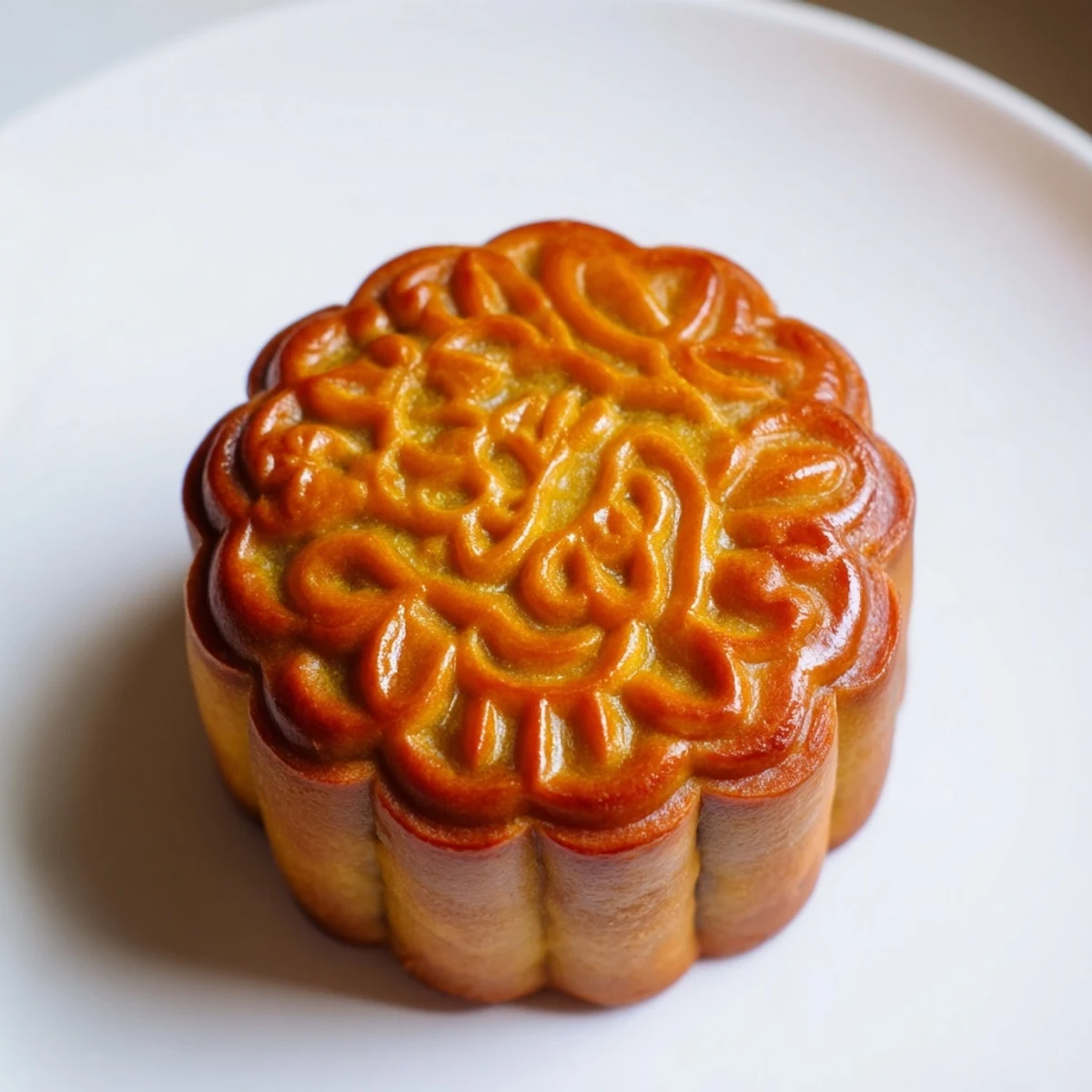
 These mooncakes feature a delicate, golden-brown pastry that encases a smooth, sweet lotus seed paste filling. The dough requires a resting period to achieve its signature tender texture, while the traditional molded imprint creates the classic appearance. Salted egg yolks nestled within the lotus paste add a savory contrast, though nuts offer an equally delicious alternative.
The process involves preparing the alkaline-water dough, portioning the filling, and carefully wrapping each ball before pressing into decorative molds. A quick egg wash creates the signature glossy finish. For the best flavor and texture, allow the finished pastries to rest for a day—the pastry softens beautifully while the filling matures into a rich, cohesive bite.
The first time I attempted mooncakes, I worked entirely by instinct and ended up with pastry that cracked like dry earth. My grandmother had made them look effortless every autumn, pressing intricate designs into golden dough while telling stories about the moon goddess. It took three failed attempts before I understood that mooncakes demand patience more than skill. Now the ritual of preparing them for the Mid-Autumn Festival feels like honoring a connection I never fully appreciated while she was alive.
Last autumn, my neighbor texted me at midnight asking if I could teach her to make mooncakes before her daughter returned from college. We worked at her kitchen table until 2 AM, flour dusting our hair and laughter filling the room. Her first batch emerged from the oven slightly uneven, but the taste transported her back to childhood festivals in Hong Kong. Sometimes the most imperfect versions become the ones we remember most fondly.
Ingredients
- 120 g all-purpose flour: Forms the tender structure of the pastry shell, so measure precisely for consistent results
- 85 g golden syrup: This honey-colored syrup creates the signature glossy finish and subtle caramel depth
- 30 g vegetable oil: Keeps the dough pliable and prevents the pastry from becoming too brittle
- 1/2 tsp alkaline water: Essential for achieving that authentic golden color and tender texture traditional to mooncakes
- 480 g lotus seed paste: The soul of the mooncake, smooth and rich with a sweetness that balances the pastry
- 12 salted egg yolks: Optional but traditional, offering a creamy savory contrast that surprises first-time tasters
- 1 egg yolk and 1 tbsp milk: Whisked together for an egg wash that creates that irresistible golden sheen
Instructions
- Prepare the syrup mixture:
- Whisk golden syrup, vegetable oil, and alkaline water until completely emulsified and smooth
- Form the resting dough:
- Add flour to the wet mixture and stir gently until dough forms, then cover and rest for 2 hours to develop texture
- Preheat your oven:
- Heat to 180°C (350°F) so it is ready when the mooncakes are shaped
- Portion the filling:
- Divide lotus seed paste into 12 balls of 40 g each, wrapping a salted egg yolk inside if using
- Divide the pastry:
- Separate rested dough into 12 equal pieces, about 20 g each for balanced ratios
- Wrap the filling:
- Flatten each dough portion into a disc, place filling in center, and carefully seal by pinching edges together
- Shape with the mold:
- Dust mold lightly with flour, press filled ball inside, then release onto parchment-lined tray
- Apply the egg wash:
- Bake for 5 minutes, then brush gently with egg yolk mixture for that signature golden finish
- Finish baking:
- Return to oven for 15 to 20 minutes until deep golden brown, then cool completely
- Rest before serving:
- Store in an airtight container for 1 to 2 days to allow the pastry to soften and develop proper texture
 Save to Pinterest
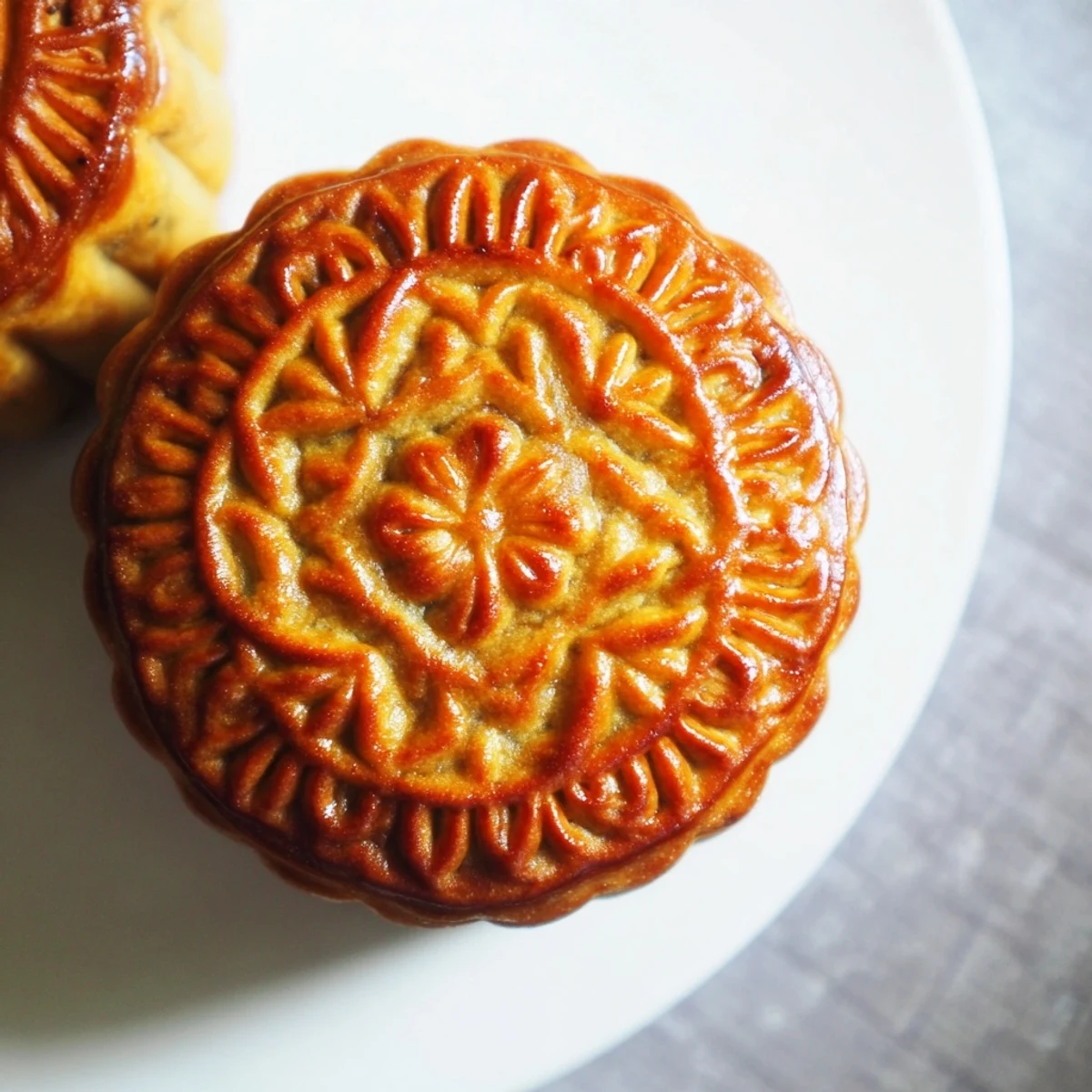
 My daughter helped me shape this year batch, her small hands carefully pressing the mold as I explained why mooncakes symbolize reunion. She asked if we could make extras for her classmates, wanting to share something that had become special to us. The kitchen filled with the scent of warm lotus and butter, a fragrance that now signals home more than any other.
The Secret to Perfect Dough
Golden syrup behaves differently than honey or sugar syrup, creating a dough that stays tender even after baking. I once tried substituting and ended up with mooncakes that tasted fine but had the wrong texture entirely. The syrup is worth seeking out at Asian markets or ordering online.
Choosing Your Filling
Store-bought lotus paste works beautifully, but making it from scratch transforms the recipe into a weekend project. The paste should be smooth and pliable, not sticky or overly stiff. If it feels too dry, knead in a tiny amount of oil until it holds together easily.
Mold Mastery
Traditional wooden molds create the most detailed impressions, but plastic press molds work perfectly for beginners. Dust the mold with flour between each mooncake to prevent sticking, and press firmly but gently. Practice makes perfect, and even misshapen mooncakes taste just as sweet.
- Chill the filled balls briefly in the refrigerator if the dough feels too soft to handle
- Rotate the mold slightly when releasing to help the mooncake drop out cleanly
- Clean your mold immediately after use with a dry brush, never water
 Save to Pinterest
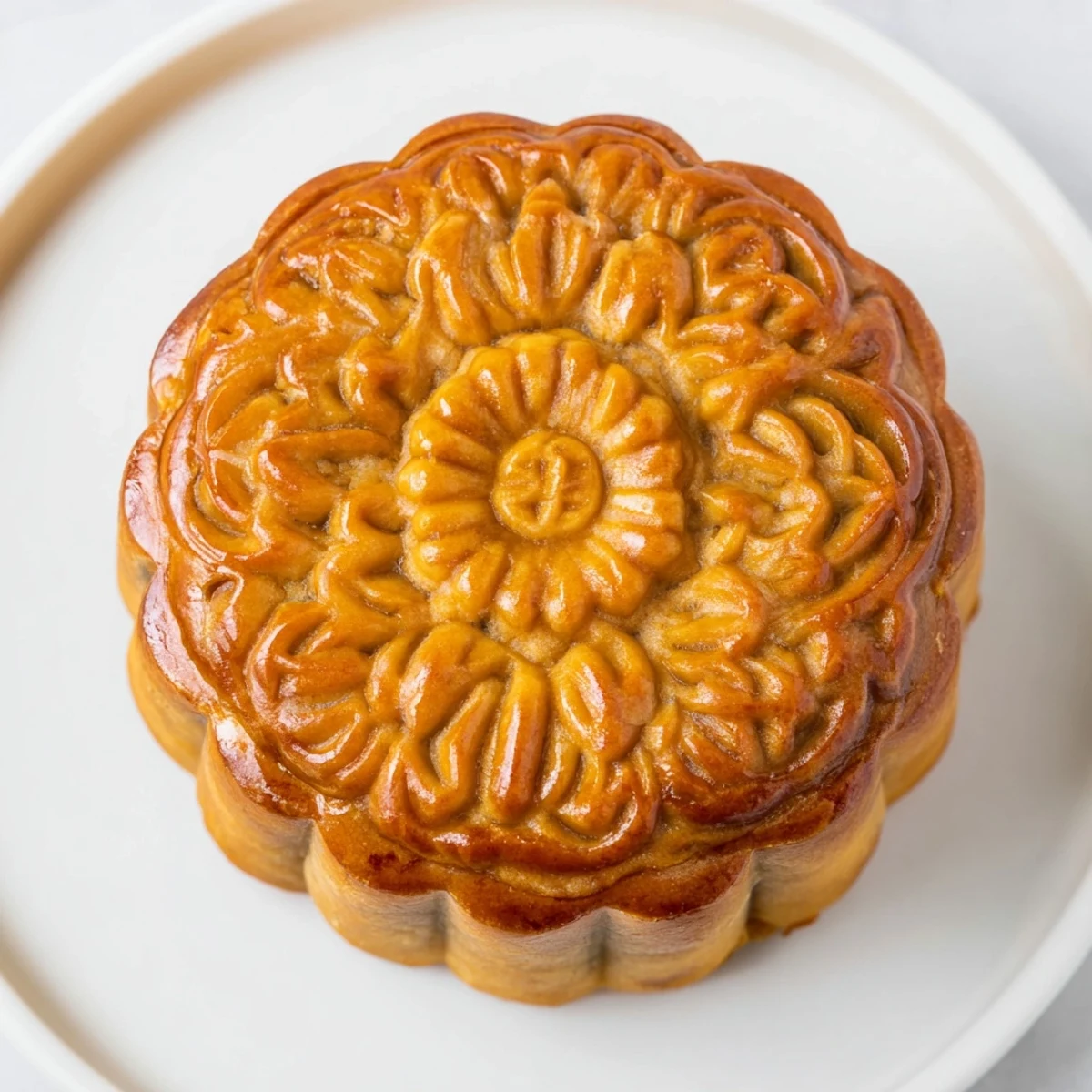
 Mooncakes have taught me that some traditions are worth preserving, even when they require extra effort and patience. Sharing them with people you love makes every minute spent shaping and waiting worthwhile.
Recipe Questions & Answers
- → Why does the dough need to rest for 2 hours?
-
Resting allows the flour to fully hydrate and the gluten to relax, which prevents shrinkage during baking and ensures the pastry achieves its characteristic tender, melt-in-your-mouth texture rather than becoming tough or elastic.
- → Can I make mooncakes without a traditional mold?
-
Yes—while molds create the classic decorative imprint, you can shape the filled dough by hand into smooth rounds or use a small tart press. The appearance will differ, but the taste and texture remain equally delicious.
- → What's the purpose of alkaline water in the dough?
-
Alkaline water promotes browning during baking, giving mooncakes their signature golden amber color. It also tenderizes the gluten structure and contributes a subtle depth of flavor essential to authentic pastry.
- → Why do mooncakes taste better after resting for a day?
-
The resting period allows moisture from the lotus paste to gradually soften the pastry, creating the characteristic tender, cohesive texture. Flavors also meld and mature, developing a richer sweetness and more balanced profile.
- → Can I prepare the dough and filling in advance?
-
Absolutely—the wrapped and filled mooncakes can be assembled and stored in the refrigerator for up to 24 hours before baking. Allow them to come to room temperature before baking for even cooking. Fully baked mooncakes keep well in an airtight container for several days.
- → What can I substitute for salted egg yolks?
-
Roasted macadamia nuts, walnuts, or pine nuts provide excellent texture and flavor. You can also omit the addition entirely—the pure lotus paste filling remains delicious and traditional on its own.