
 Save to Pinterest
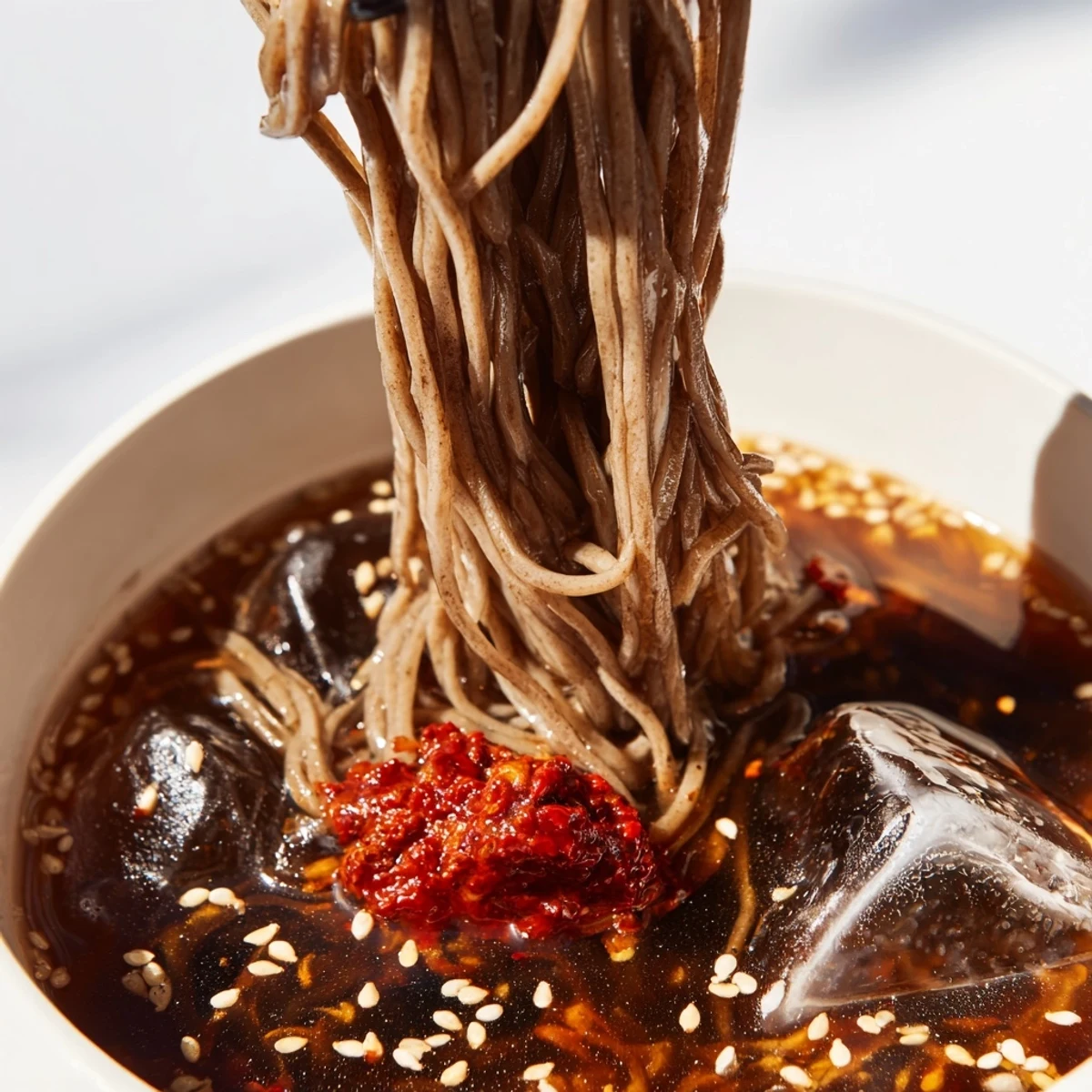
 Experience the authentic flavors of Korean cuisine with naengmyeon, a beloved cold noodle dish that's perfect for warm weather. This dish features chewy buckwheat noodles served in an ice-cold, tangy broth made with beef stock, rice vinegar, and sesame oil. The refreshing soup is topped with thinly sliced beef brisket, crisp cucumber, sweet Asian pear, and halved hard-boiled eggs. The key to perfect naengmyeon lies in the temperature—everything should be served ice-cold, from the broth to the noodles and even the serving bowls. The contrast between the chewy noodles, crisp vegetables, and refreshing tangy broth creates a uniquely satisfying eating experience that's both light and filling.
The first time I encountered naengmyeon was at a tiny Korean restaurant in Los Angeles where the waiter warned me about the scissors. Apparently cutting your noodles with scissors is completely normal, though I felt ridiculous doing it. The broth hit me first—shockingly cold, tangy, and somehow refreshing in a way I didn't know soup could be. Now I make it whenever summer temperatures climb past bearable, that memory of my first slurp still vivid.
Last July, when my apartment AC died during a heatwave, I lived on this soup for three days straight. My roommate thought I'd lost my mind eating cold broth for breakfast, lunch, and dinner, but honestly it was the only thing that made sense. We ended up sitting cross-legged on the kitchen floor, sweating and slurping noodles, while the fan whirred uselessly in the corner. Sometimes the most memorable meals happen when everything else is falling apart.
Ingredients
- Beef broth: Homemade gives the cleanest flavor, but low-sodium works perfectly fine—just avoid anything too salty or it'll overpower the delicate tang
- Rice vinegar: This is the backbone of that signature bright, sour kick that makes naengmyeon so addictive
- Naengmyeon noodles: Look specifically for Korean buckwheat noodles in the Asian aisle—soba works in a pinch but the texture is slightly different
- Asian pear: Adds this subtle sweetness and crunch that cuts through the vinegar beautifully
- Cucumber: Thinly sliced brings this incredible fresh crunch that makes every spoonful interesting
Instructions
- Make the icy broth base:
- Whisk together your beef broth, cold water, rice vinegar, sugar, soy sauce, sesame oil, and salt until everything dissolves completely. Pop it in the fridge at least an hour before serving—the broth needs to be frigid, and I mean seriously cold.
- Prep all your toppings first:
- Boil those eggs for exactly 10 minutes, then shock them in cold water for easier peeling later. Slice your beef brisket thin, julienne that cucumber, and cut your Asian pear into matchsticks while you're at it.
- Cook the noodles perfectly:
- Boil your naengmyeon noodles for 3 to 4 minutes, then drain and rinse under freezing cold water for a full minute. This step is non-negotiable—the ice bath stops cooking and removes all that sticky starch.
- Build your bowl:
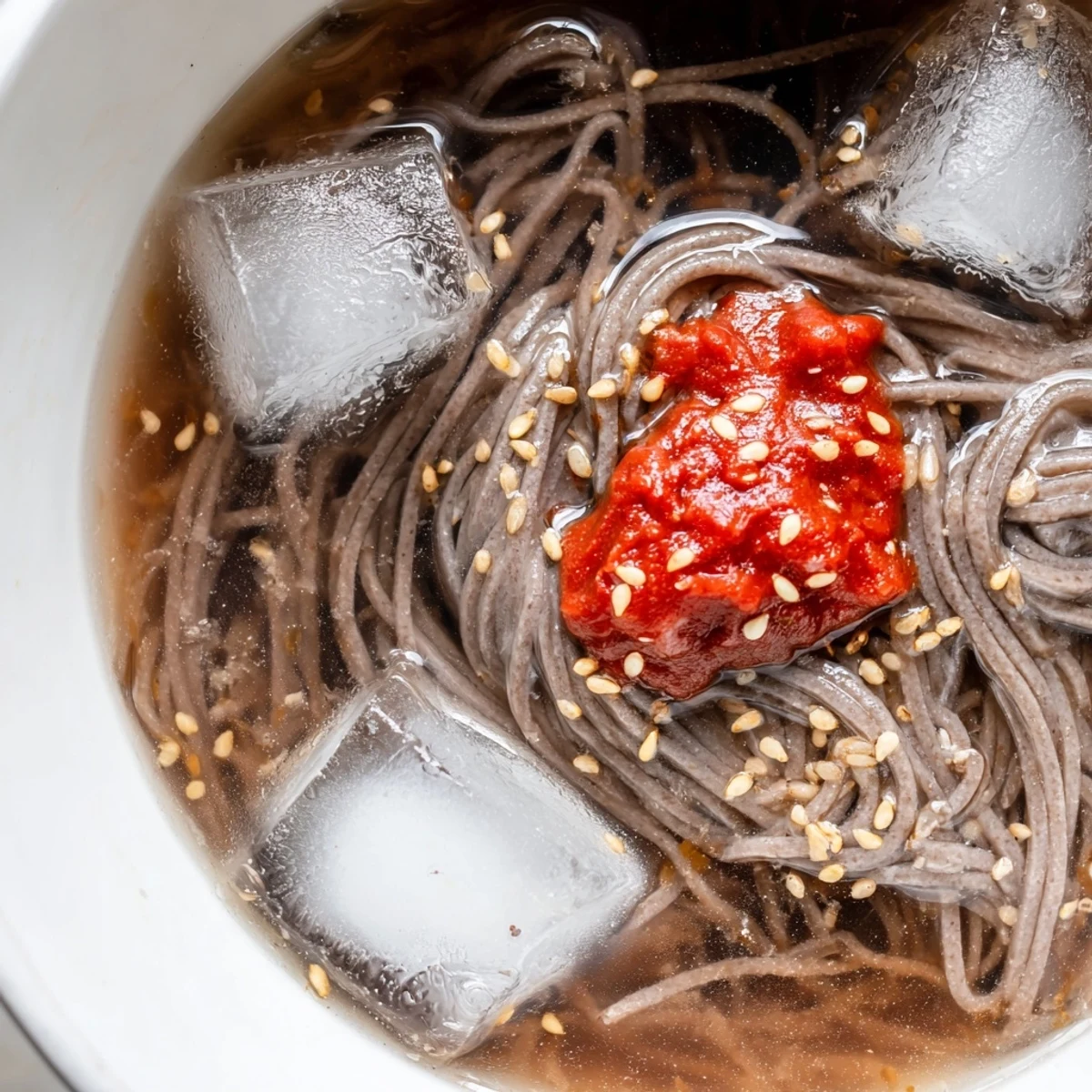
- Divide the chilled noodles among four bowls, then pour that cold broth over them like you mean business. Arrange your toppings in neat sections: cucumber on one side, pear on another, beef slices draped across, and that halved egg right in the center.
- Finish with flair:
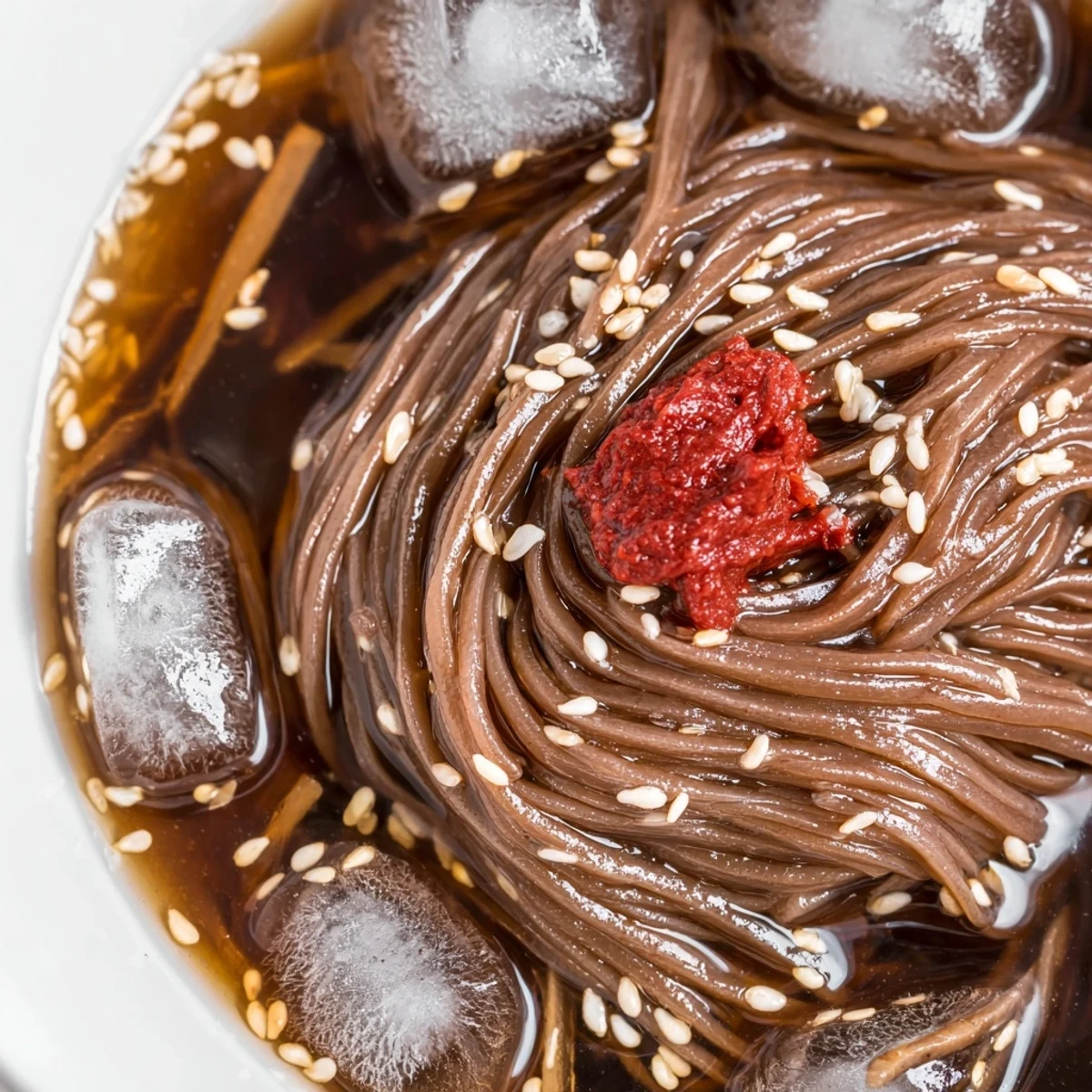
- Toss in those ice cubes—they'll keep everything shockingly cold while you eat. Sprinkle sesame seeds over everything, add a spoonful of gochujang if you want some heat, and serve immediately.
 Save to Pinterest
 My grandmother visited last summer and watched me make this, absolutely skeptical about cold soup. She took one cautious sip and her eyes went wide—ended up asking for the recipe before she even finished her bowl. There's something magical about watching someone discover naengmyeon for the first time, that moment of realization that cold soup actually makes perfect sense.
Make It Your Own
I've started playing around with the broth base lately—sometimes I splash in a little dongchimi brine from my radish kimchi for extra funk. My friend swears by adding a drop of mustard oil for something completely unexpected. The beauty of naengmyeon is how forgiving it is once you understand that cold-tangy-sweet balance.
Serving It Right
Traditional Korean restaurants serve naengmyeon in metal bowls that frost over from the cold, and honestly that little detail makes a difference. If you have stainless steel bowls, use them—something about the cold metal against your lips adds to the experience. Set out extra vinegar and mustard at the table so everyone can adjust their own bowl.
Meal Prep Magic
This recipe is actually a meal prep dream if you keep a few things in mind. The broth keeps for five days in the fridge and actually gets better as flavors meld together. I cook noodles fresh each time because they get gummy, but everything else can be sliced and ready to go.
- Store broth and toppings separately—noodles soak up flavor and get weirdly soft
- Keep those eggs unpeeled until you're ready to eat, they stay fresher that way
- Freeze extra beef broth in ice cube trays for instant cold broth starter
 Save to Pinterest
 Theres something profoundly satisfying about a dish that's been perfecting itself for generations, arriving in your kitchen exactly when you need it most. Make this on the next hot day and thank me later.
Recipe Questions & Answers
- → What makes naengmyeon broth authentic?
-
Traditional naengmyeon broth gets its authentic tangy flavor from rice vinegar combined with beef broth, soy sauce, and a touch of sesame oil. For extra authenticity, some cooks add dongchimi (radish water kimchi) brine to enhance the sour depth. The broth must be served ice-cold, often with ice cubes added directly to the bowl.
- → Can I substitute naengmyeon noodles?
-
While traditional naengmyeon noodles are made from buckwheat and sweet potato starch, you can substitute with soba noodles (buckwheat noodles) if authentic Korean noodles are unavailable. The texture will be slightly different but still delicious. For a completely gluten-free option, use 100% buckwheat soba noodles.
- → Why is rinsing the noodles important?
-
Rinsing the cooked noodles thoroughly under cold running water serves two purposes: it stops the cooking process to maintain the perfect chewy texture, and it removes excess starch that can make the broth cloudy and gummy. The cold water shock also helps the noodles maintain their springy consistency.
- → How far in advance can I prepare components?
-
The broth tastes better when made ahead and refrigerated for at least 2-4 hours or overnight. Cooked beef can be sliced and stored for up to 3 days. Eggs can be boiled and peeled up to 2 days in advance. However, cook the noodles just before serving as they can become gummy if left too long after cooking.
- → What protein alternatives work well?
-
Beyond traditional beef brisket, you can use shredded rotisserie chicken, pork bulgogi, or even make it vegetarian with shiitake mushrooms and extra vegetables. For a lighter version, skip the meat entirely and load up on vegetables and tofu. The broth carries enough flavor to stand alone.
- → How do I adjust the broth's flavor balance?
-
The broth should balance sour, salty, and slightly sweet notes. Start with the base recipe and adjust to taste: add more rice vinegar for extra tang, additional sugar if it's too sharp, or a splash of soy sauce for depth. Remember that flavors will seem muted when cold, so season slightly more aggressively than you would for hot soup.