
 Save to Pinterest
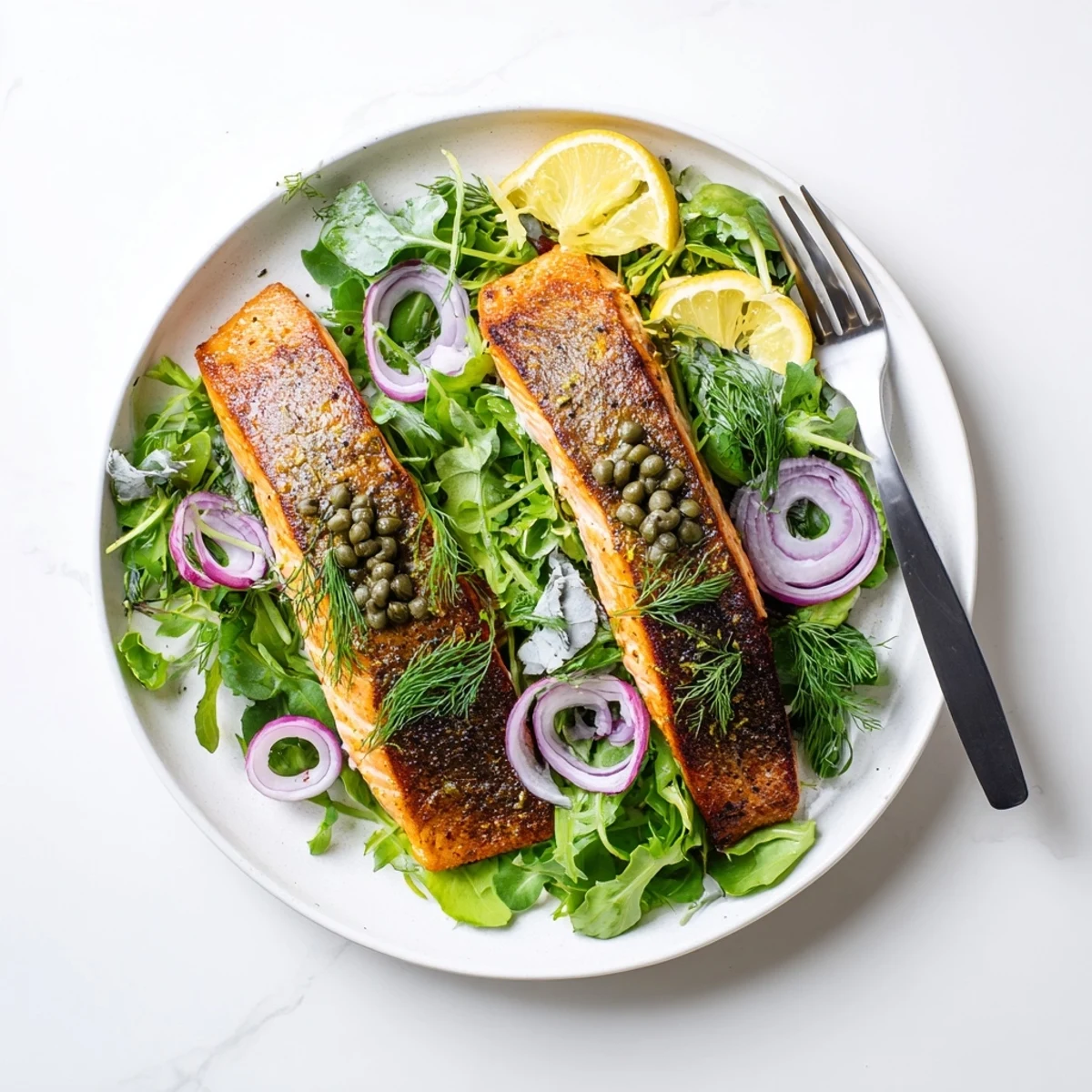
 Create restaurant-quality Tasmanian Atlantic salmon at home with this simple technique. The secret lies in scoring the skin and pressing it gently in the hot pan to achieve that coveted crunch. Ready in just 20 minutes, this dish features beautifully seared fillets served over a vibrant salad of baby greens, fresh dill, parsley, capers, and red onion dressed with lemon and olive oil.
The fishmonger at Hobart's waterfront market told me something about Tasmanian salmon that stuck: they swim in some of the cleanest waters on earth, and you can taste it. That weekend, I brought home two fillets and decided to let them shine with nothing more than salt, heat, and patience. When the skin started crackling in the pan like thin paper, my partner walked in asking what smelled so incredible. That first bite—crispy, salty skin giving way to buttery pink flesh—made me realize sometimes the most elegant meals are the ones that barely interfere with what's already perfect.
Last summer, my friend Sarah came over for a catch-up dinner after a brutal week at work. I had just scored some beautiful Tasmanian salmon and threw this together while we talked. She took one bite and went quiet—a rare moment for Sarah—then asked if I'd teach her the crispy skin secret. Now it's our thing: whenever life gets overwhelming, one of us texts simply salmon tonight, and we know exactly what that means.
Ingredients
- 2 x 180 g Tasmanian Atlantic salmon fillets, skin on: I've learned Tasmanian salmon has a higher fat content than other varieties, which means more flavor and forgiveness if you accidentally overcook by thirty seconds
- 1 tbsp olive oil: You want just enough to coat the pan—too much oil makes the skin go soggy instead of shatteringly crisp
- Sea salt, to taste: Flaky salt like Maldon creates these tiny salty crystals that stick to the skin, and that's where the magic happens
- Freshly ground black pepper, to taste: Grind it right before you season—pre-ground pepper has no soul left in it
- 2 cups mixed baby greens: I like the peppery kick of arugula mixed with mild spinach, but honestly whatever looks fresh at the market works
- 1/2 small red onion, thinly sliced: Soak the slices in ice water for ten minutes if raw onion is too sharp for your taste—sweetens them right up
- 1/4 cup fresh dill, roughly chopped: Dill and salmon are one of those combinations that just makes sense, like tomatoes and basil
- 1/4 cup flat-leaf parsley, roughly chopped: Flat-leaf has more flavor than curly parsley—curly is mostly for garnish, not eating
- 1 tbsp capers, rinsed and drained: These little salty buds pop between your teeth and add this briny brightness that wakes up the whole dish
- Zest of 1 lemon: Zest before you juice—you'll get way more aromatic oil out of the skin that way
- 2 tbsp extra-virgin olive oil: Save your good oil for the salad where you can actually taste it
- Juice of 1/2 lemon: Room temperature lemons give more juice than cold ones, and they're easier to squeeze
Instructions
- Prep the salmon:
- Pat those fillets completely dry with paper towels—like, really dry, any moisture on the skin will steam instead of crisp up. Use a sharp knife to score the skin in three shallow diagonal cuts, which helps it contract evenly instead of curling up like a ribbon. Season both sides generously with salt and pepper.
- Get the pan hot:
- Heat the olive oil in a nonstick skillet over medium-high heat until it shimmers and moves like liquid mercury when you tilt the pan. You should see faint wisps of smoke—that's your cue the pan is ready.
- Sear skin-side down:
- Lay the salmon in the pan skin-side first, then immediately press down gently with a spatula for thirty seconds. This little bit of pressure keeps the skin from buckling as it hits the heat. Now step back and let it work—don't touch it.
- Wait for the magic:
- Cook for 4 to 5 minutes until you can see the salmon turn opaque halfway up the sides and the skin is making this satisfying crackling sound. When you wiggle the spatula underneath, the skin should feel stiff and release easily from the pan.
- Finish cooking:
- Flip carefully and cook for just 1 to 2 more minutes. You want the center slightly translucent—that's medium, and it'll keep cooking as it rests. Remove to a plate and let it sit for a couple of minutes while you make the salad.
- Toss the salad:
- Combine the greens, red onion, dill, parsley, capers, and lemon zest in a large bowl. Drizzle with the olive oil and lemon juice, then season with salt and pepper. Use your hands to toss everything gently—tongs bruise delicate greens.
- Plate it up:
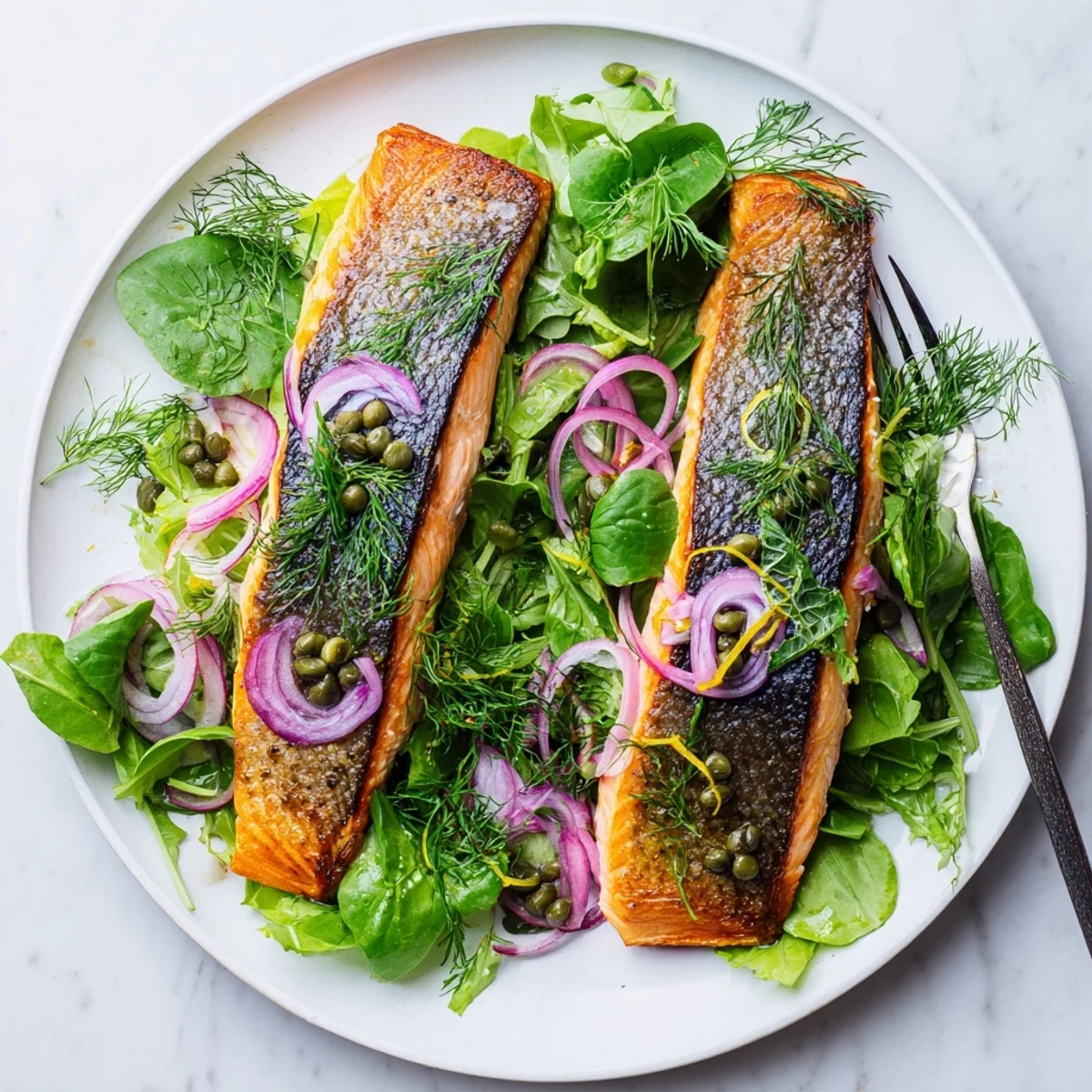
- Mound some salad on each plate and nestle a salmon fillet on top, skin-side up so everyone can see what you've accomplished. The contrast of that warm crispy fish against the cool bright salad is the whole point.
 Save to Pinterest
 My mother always overcooked salmon until it was dry and flaky, which I thought was just how salmon tasted. Then I ordered it at a proper restaurant in Sydney and realized I'd been missing something extraordinary my whole life. Now when I make it at home, I think of her and wish I could go back and show her what salmon is supposed to taste like.
Getting That Skin Right
Here's something I discovered after years of okay-but-not-great results: start with cold fish straight from the fridge. Room temperature salmon releases moisture faster, and moisture is the enemy of crispy skin. Also, nonstick pans really do matter here—I've tried stainless steel and ended up with half the skin stuck to the bottom.
Make It Yours
Once you've got the technique down, this becomes a template you can play with. I've swapped the dill for tarragon when I had an abundance in the garden, and cilantro works surprisingly well too. The only thing I wouldn't mess with is the capers and lemon combo—that briny acid is what ties the whole dish together.
What To Serve Alongside
When I'm feeling fancy, I'll serve this with some roasted baby potatoes tossed in the same herbs I used for the salad. But honestly, a chunk of crusty bread to soak up any extra dressing and maybe some grilled asparagus if it's season—that's dinner enough. The salad counts as your vegetable.
- A crisp white wine like Sauvignon Blanc cuts through the rich salmon perfectly
- If you're avoiding alcohol, sparkling water with a wedge of lemon works just as well
- This serves two generously, but you can easily double everything for a dinner party
 Save to Pinterest
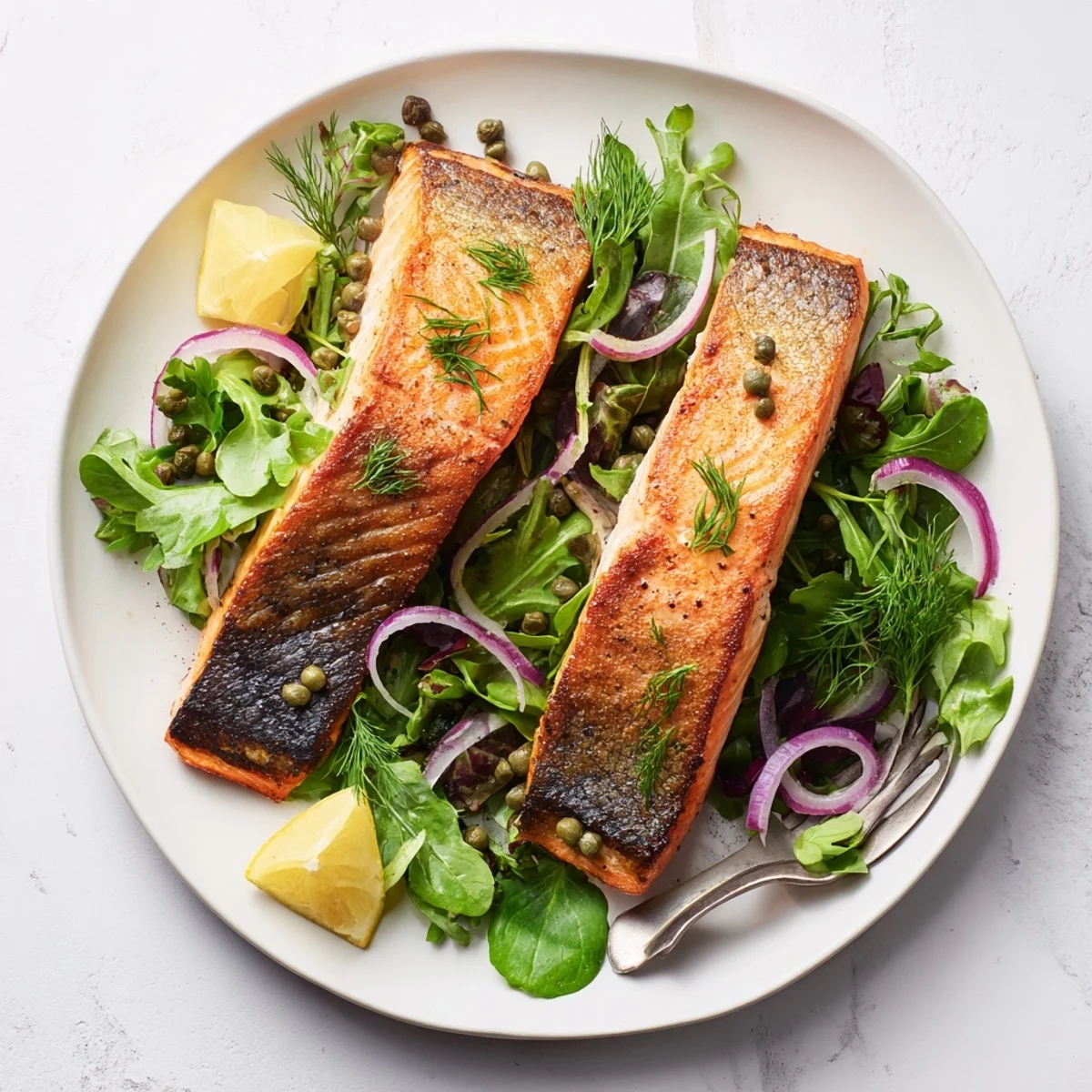
 There's something deeply satisfying about a meal that comes together in twenty minutes but tastes like you put in way more effort. That's the kind of cooking I want more of in my life.
Recipe Questions & Answers
- → How do I get the skin really crispy?
-
Pat the salmon completely dry with paper towels before cooking. Score the skin lightly with a sharp knife, and press the fillets firmly with a spatula for the first 30 seconds of cooking to prevent curling and ensure even contact with the pan.
- → What's the best way to tell when salmon is done?
-
The salmon is ready when it's mostly opaque with a slightly translucent center. This medium-rare stage ensures moist, tender fish. The internal temperature should reach 125-130°F for medium-rare or 140°F for well done.
- → Can I use frozen salmon fillets?
-
Yes, thaw them completely in the refrigerator overnight before using. Pat them extra dry to remove excess moisture, which helps achieve the crispy skin. Allow them to come to room temperature for 15 minutes before cooking for even results.
- → What other herbs work in the salad?
-
Fresh tarragon, chives, basil, or cilantro make excellent alternatives or additions to the dill and parsley. Choose herbs that complement the salmon's rich flavor and add brightness to the dish.
- → Can I cook this on a regular stainless steel pan?
-
Yes, stainless steel works well. Heat the pan thoroughly before adding oil, and ensure it's properly hot before placing the salmon. You may need slightly more oil than with nonstick to prevent sticking.