
 Save to Pinterest
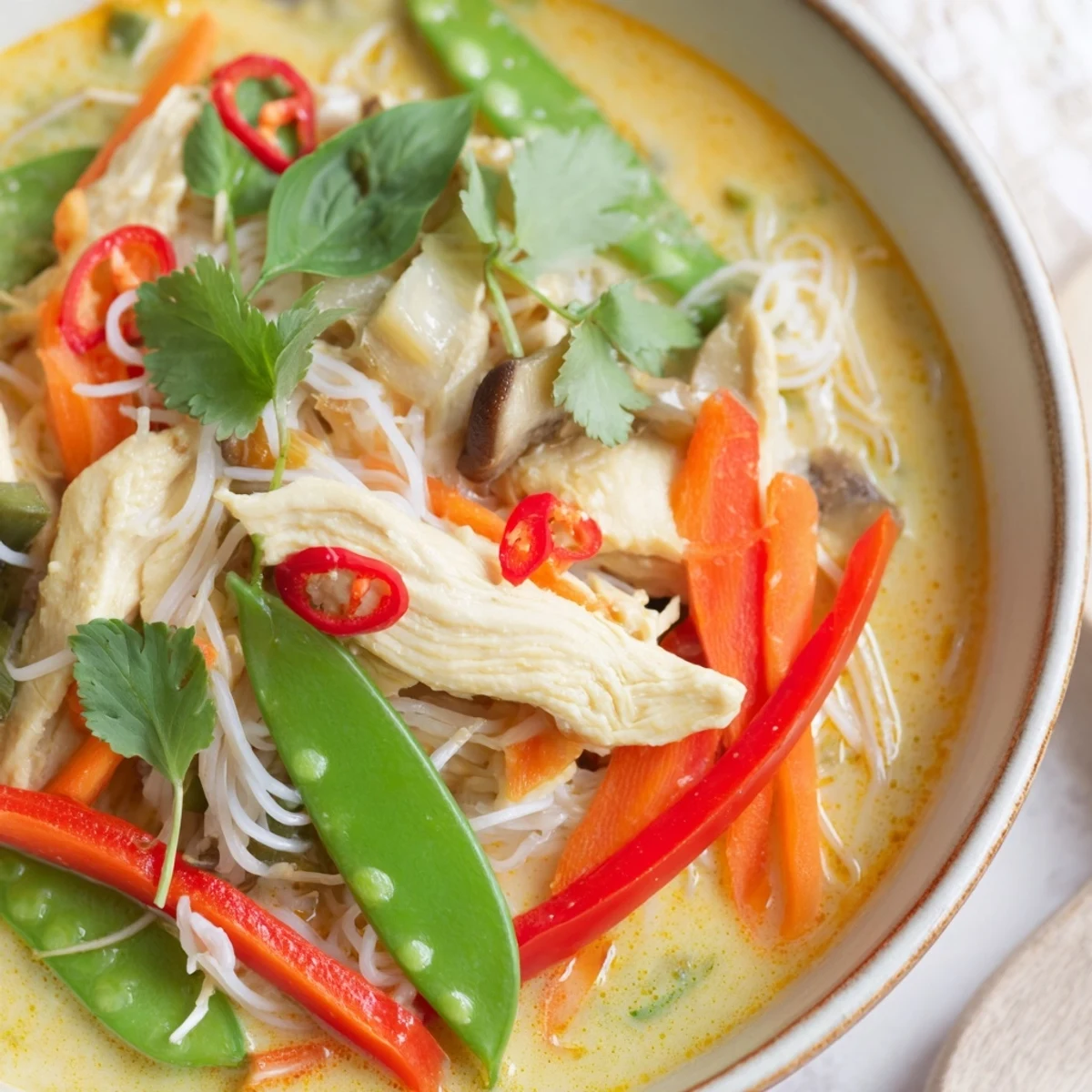
 This vibrant bowl features tender chicken slices simmered in a fragrant Thai green curry coconut broth with colorful vegetables. Rice noodles soak up the rich, spicy flavors while fresh garnishes add brightness. Perfect for those craving authentic Thai cuisine at home, ready in under an hour.
The first time I made green curry soup, it was raining sideways and I had a cold that wouldn't quit. Something about that broth—coconut milk meeting lime, ginger cutting through the steam—cleared out everything stuffed inside my head. Now it's my rainy day weapon, the pot simmering away while the windows blur with water.
Last winter, I made this for a friend recovering from surgery. She took one sip and actually closed her eyes, letting out this long exhale. Later she told me it was the first thing that had tasted like something in weeks. That's the power of coconut curry—its not just dinner, its medicine.
Ingredients
- 400 g boneless chicken breast or thighs, thinly sliced: Thighs stay juicier in soup, but breast works if that's what you have. Slice against the grain so each piece is tender.
- 200 g rice noodles, medium width: These soak up the curry broth without falling apart. Don't overcook them—al dente is better than mushy.
- 1 red bell pepper, thinly sliced: Adds sweetness and color. A yellow pepper works too, but red looks more striking against the green broth.
- 100 g sugar snap peas, trimmed: They keep their crunch, which is exactly what you want in a soup like this.
- 2 carrots, julienned: Use a vegetable peeler to make quick ribbons if you don't want to julienne properly.
- 100 g shiitake mushrooms, sliced: They add umami and a meaty texture. Button mushrooms work but shiitakes are worth seeking out.
- 1 small onion, finely chopped: The base that everything else builds on.
- 2 tbsp Thai green curry paste: This is where all the flavor lives. Taste your brand first—some are mild, some will knock you sideways.
- 2 cloves garlic, minced: Fresh is non-negotiable here. Jarred garlic has a weird sweetness that doesn't belong.
- 1 tbsp fresh ginger, grated: Peel it with a spoon instead of a knife so you don't lose the flesh underneath.
- 2 stalks lemongrass, bruised: Smash them with the back of your knife to release the citrusy oils. Don't skip this—it's what makes the broth sing.
- 750 ml chicken stock: Homemade is better, but a good-quality boxed stock works fine.
- 400 ml coconut milk: Full-fat is the only way. Light coconut milk just tastes like watered-down disappointment.
- 1 tbsp fish sauce: Don't be scared by the smell straight from the bottle. It transforms in the soup into pure depth.
- 1 tsp soy sauce: Adds another layer of savory richness.
- Juice of 1 lime: Fresh only. Bottled lime juice has a metallic taste that ruins the finish.
- Fresh coriander, Thai basil, sliced chili, lime wedges: These aren't optional. They're the punctuation mark on the whole dish.
Instructions
- Prep the noodles:
- Cook them according to the package, then drain and rinse with cold water. This stops the cooking so they don't turn into a starchy blob in your soup.
- Build the aromatics:
- Heat your pot over medium, add oil, and sauté the onion, garlic, and ginger for 2 minutes. You should smell them before you see them cooking—that's when you know the pan is hot enough.
- Wake up the curry paste:
- Stir in the curry paste and cook for 1 minute. This step is crucial—raw curry paste tastes harsh, but cooked it blooms into something fragrant and complex.
- Cook the chicken:
- Add the sliced chicken and cook just until it turns opaque, about 3 minutes. It will finish cooking in the broth, so don't overdo it now.
- Simmer the base:
- Pour in the chicken stock, add the bruised lemongrass, and bring to a gentle boil. Reduce heat and simmer for 8 minutes to let the flavors marry.
- Add the coconut and vegetables:
- Stir in the coconut milk, fish sauce, soy sauce, bell pepper, carrots, mushrooms, and snap peas. Simmer gently for 7 to 10 minutes until the vegetables are just tender but still have bite.
- Finish with brightness:
- Fish out the lemongrass stalks—do not skip this step unless you want your guests chewing on tough grass. Stir in the lime juice and taste. Add more fish sauce or lime if it needs balance.
- Assemble the bowls:
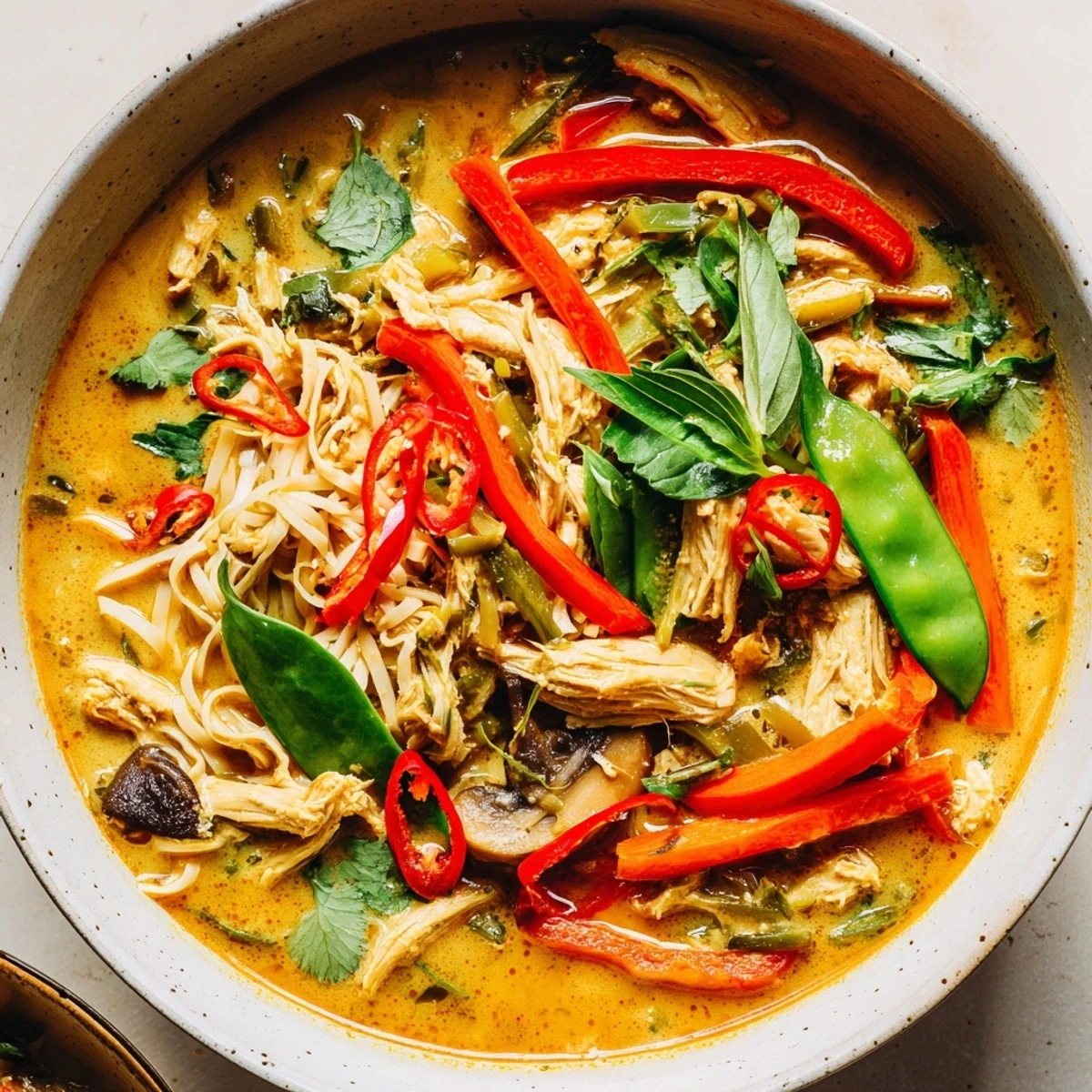
- Divide the noodles among serving bowls, ladle the hot soup over them, and pile on the garnishes. The herbs should hit the hot steam right before you eat.
 Save to Pinterest
 This soup has become my go-to when someone needs comfort. Last month I made it for a neighbor going through a divorce, and she asked for the recipe before she even finished her first bowl. Some dishes feed more than hunger.
Making It Your Own
The base is solid, but the variations are endless. I've made this with shrimp, tofu, even just vegetables when I was out of protein. The curry-coconut combination works with almost anything that floats in broth.
The Heat Factor
Curry paste brands vary wildly in spice level. Start with less than you think you need, taste as you go, and add more if you want more fire. Remember: you can always add heat, but you can't take it away.
Leftover Strategy
This soup actually tastes better the next day, once the flavors have had time to hang out together. Store the noodles separately or they'll drink up all the broth and turn into a solid mass.
- If you're meal-prepping, keep everything in separate containers and combine when you reheat.
- The broth freezes beautifully without the noodles—just add fresh noodles when you thaw it.
- Reheat gently over medium-low heat, stirring frequently so the coconut milk doesn't separate.
 Save to Pinterest
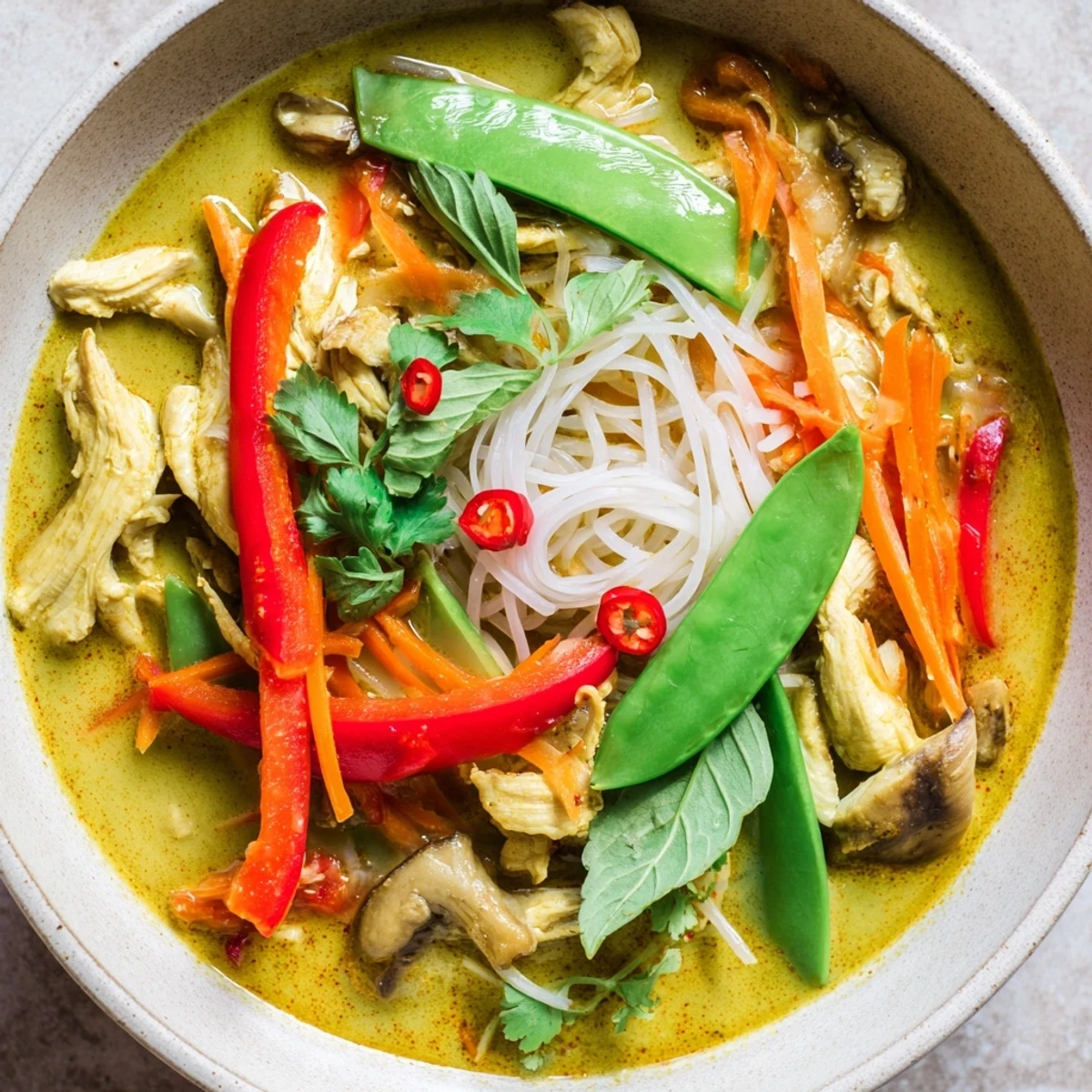
 Serve this with a glass of something cold and crisp, and watch how quickly the bowls empty. There's something about that combination of heat, cream, and acid that makes people lean in closer to the table.
Recipe Questions & Answers
- → How spicy is this dish?
-
The heat level depends on the green curry paste you use. Start with 2 tablespoons and adjust to your preference. You can reduce the amount for a milder version or add fresh chilies as garnish for extra heat.
- → Can I make this vegetarian?
-
Absolutely. Replace chicken with firm tofu cubes and substitute fish sauce with additional soy sauce or a vegetarian alternative. The curry paste provides plenty of flavor without needing meat.
- → What type of rice noodles work best?
-
Medium-width rice noodles are ideal as they hold up well in the hot broth without becoming too soft. Look for banh pho or pad Thai style noodles. Soak them according to package directions before adding to bowls.
- → Can I prepare this in advance?
-
The soup base tastes even better the next day as flavors meld. Store the broth and chicken separately from cooked noodles, then combine when reheating. Noodles can become mushy if left sitting in the liquid too long.
- → What vegetables can I substitute?
-
Bok choy, baby corn, snow peas, or broccoli work beautifully. For heartier greens like kale or spinach, add them in the last 2-3 minutes of cooking to maintain texture.
- → Is there a substitute for lemongrass?
-
Fresh lemongrass provides essential citrus notes. If unavailable, use lemongrass paste (1 teaspoon) or add a strip of lime zest with the aromatics. The flavor won't be identical but still delicious.