
 Save to Pinterest
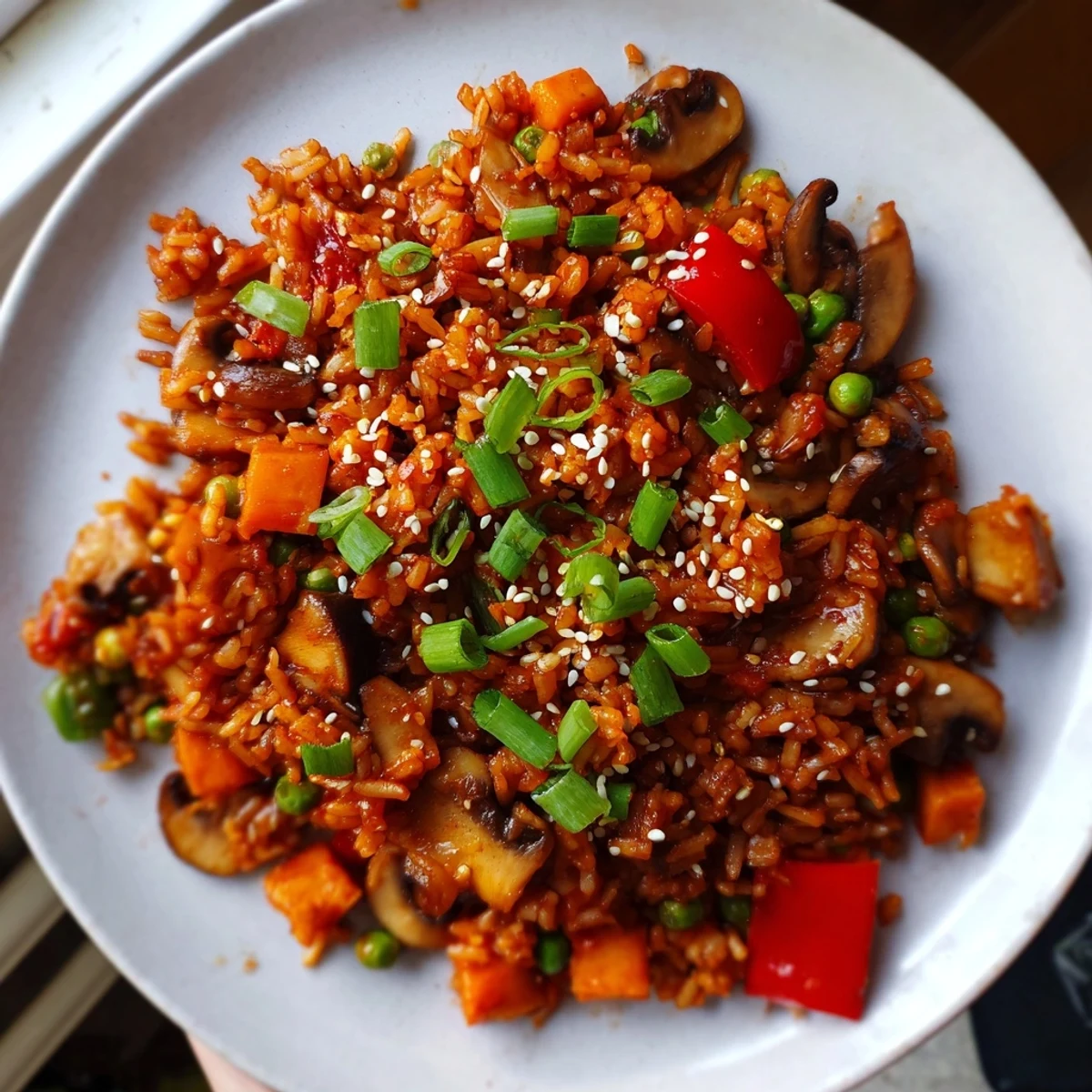
 This vibrant Korean-inspired dish transforms day-old rice into a spicy, savory masterpiece using gochujang chili paste. The combination of crisp vegetables, aromatic garlic and onions, and the perfect balance of sweet and heat creates a satisfying plant-based meal that comes together in just 30 minutes.
The key to achieving restaurant-quality results lies in using cold, day-old rice and high heat for that coveted slightly crispy texture. The sauce blends gochujang's fermented depth with soy sauce, sesame oil, and a touch of maple syrup for balanced flavors that coat every grain.
The sizzle of rice hitting a screaming hot wok is one of those sounds that instantly makes a kitchen feel alive, and this gochujang fried rice has been turning quiet weeknights into something electric in my household for over a year now.
One Tuesday my neighbor knocked on my door asking about the smell drifting into the hallway, and we ended up sharing the entire batch standing around my kitchen island with chopsticks straight from the pan.
Ingredients
- 3 cups cooked jasmine or short grain rice (preferably day old): Day old rice is the non negotiable secret here because fresh rice holds too much moisture and turns gummy instead of frying up with those coveted crispy edges.
- 1 medium carrot, diced: Small uniform dice ensures every bite gets a sweet crunch without holding up the quick cooking time.
- 1 cup frozen peas: No need to thaw them, they burst beautifully in the hot pan and add bright pops of sweetness.
- 1 red bell pepper, diced: The sweetness of red pepper specifically balances the ferocious heat of the gochujang in a way other colors simply cannot match.
- 4 green onions, sliced (separate white and green parts): The whites go into the pan early for a savory backbone while the greens stay raw for a fresh oniony finish.
- 2 cloves garlic, minced: Fresh garlic makes a noticeable difference here since there are so few aromatics carrying the flavor.
- 1 cup shiitake or button mushrooms, sliced: Shiitakes bring an earthy umami depth that pairs naturally with Korean flavors, but buttons work in a pinch.
- 3 tbsp gochujang (vegan Korean chili paste): This fermented chili paste is the heart and soul of the dish, so seek out a brand without added honey or fish products.
- 2 tbsp soy sauce or tamari: Tamari keeps things gluten free while delivering the same salty depth.
- 1 tbsp toasted sesame oil: Just a tablespoon stirred into the sauce adds a nutty perfume that makes the whole dish taste restaurant quality.
- 1 tbsp maple syrup or agave: A touch of sweetness rounds out the chili heat and enhances the natural fermentation complexity of the gochujang.
- 1 tbsp rice vinegar: A splash of acidity brightens the entire pan and prevents the rich sauce from feeling heavy.
- 1 tbsp neutral oil: Vegetable or canola oil lets the flavors shine without competing, unlike olive oil which would muddle the Korean profile.
- Sesame seeds and extra sliced green onions for garnish: These finishing touches add texture contrast and a visual warmth that makes the dish feel complete.
Instructions
- Whisk the sauce together:
- In a small bowl, combine the gochujang, soy sauce, sesame oil, maple syrup, and rice vinegar until smooth and unified, then set it aside so the flavors can mingle while you cook.
- Get the pan screaming hot:
- Heat the neutral oil in a large skillet or wok over medium high heat until it shimmers and a tiny drop of water flicked in dances across the surface.
- Build the aromatic base:
- Toss in the white parts of the green onions, the minced garlic, and the diced carrots, then stir fry for about two minutes until the carrots just begin to soften and your kitchen smells incredible.
- Add the hearty vegetables:
- Slide in the bell pepper and mushrooms and cook for two to three minutes, letting them catch some color and brown slightly against the hot pan.
- Toss in the peas:
- Add the frozen peas straight from the freezer and stir for about a minute just until they are warmed through and bright green.
- Fry the rice:
- Crank the heat to high and add the cooked rice, breaking up any stubborn clumps with your spatula, then stir fry for two to three minutes so every grain gets kissed by the hot pan.
- Sauce and toss everything:
- Pour the gochujang sauce over the rice and vegetables and stir vigorously so every grain is coated in that gorgeous red sauce, cooking for another two to three minutes until the rice gets slightly crispy in spots.
- Finish and serve:
- Remove from heat, fold in the green parts of the green onions, taste for seasoning, and serve immediately topped with sesame seeds and extra sliced green onions.
 Save to Pinterest
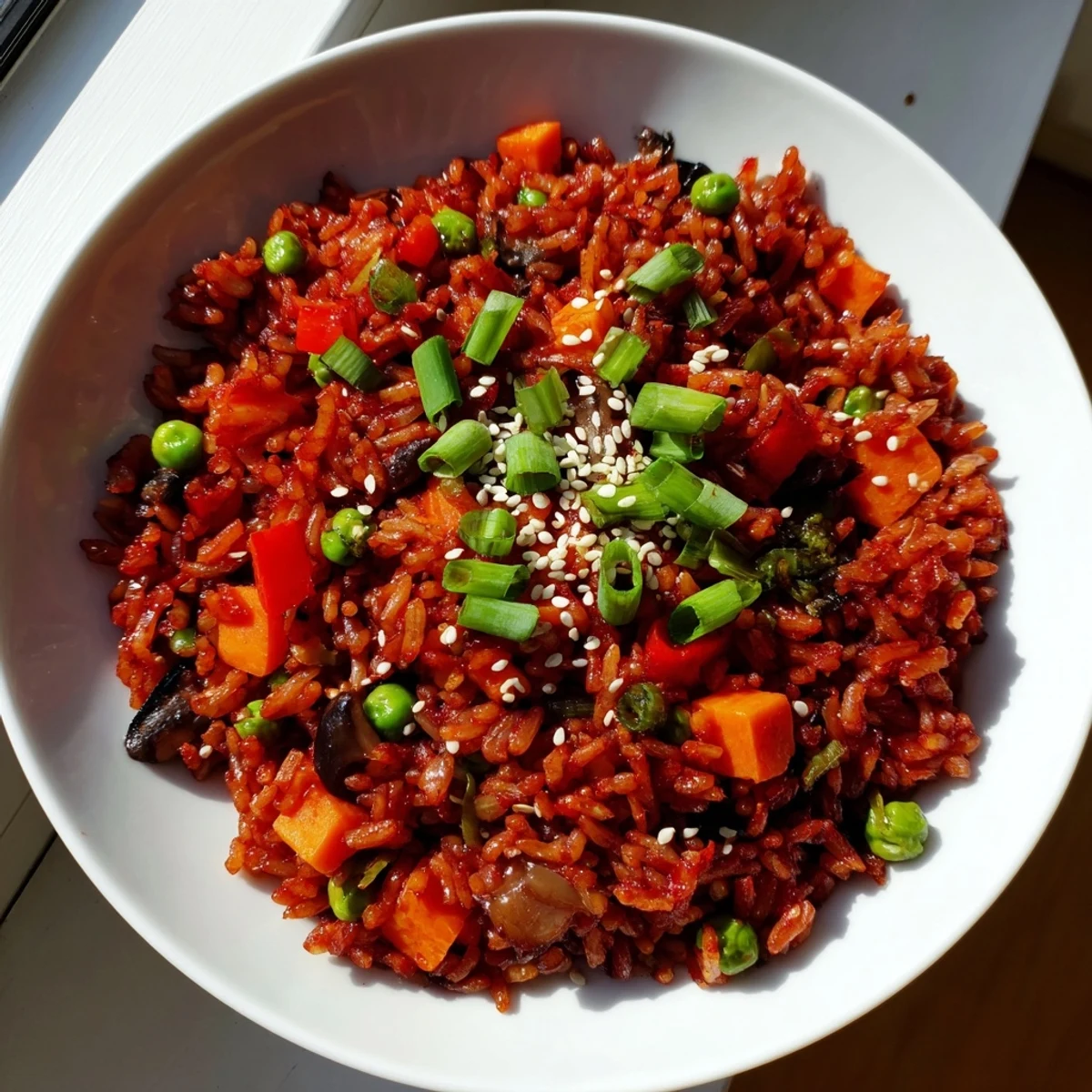
 There is something about the way that bright red rice fills a bowl that makes people lean in closer, and I have watched this humble dish turn skeptical dinner guests into devoted fans more times than I can count.
Making It Your Own
This recipe is endlessly forgiving and practically begs for improvisation based on what you have on hand.
Storage and Leftovers
Leftovers keep beautifully in an airtight container in the fridge for up to three days and actually taste even better the next day when the sauce has had time to soak into the grains.
Serving Suggestions
I love building a casual spread around this rice when friends come over because it pairs well with so many simple sides.
- Top each bowl with cubed baked tofu or a handful of shelled edamame for a heartier meal.
- Serve alongside quick pickled cucumbers and some kimchi for a full Korean inspired spread.
- A fried egg on top is technically not vegan but absolutely worth it if that is not a concern for you.
 Save to Pinterest
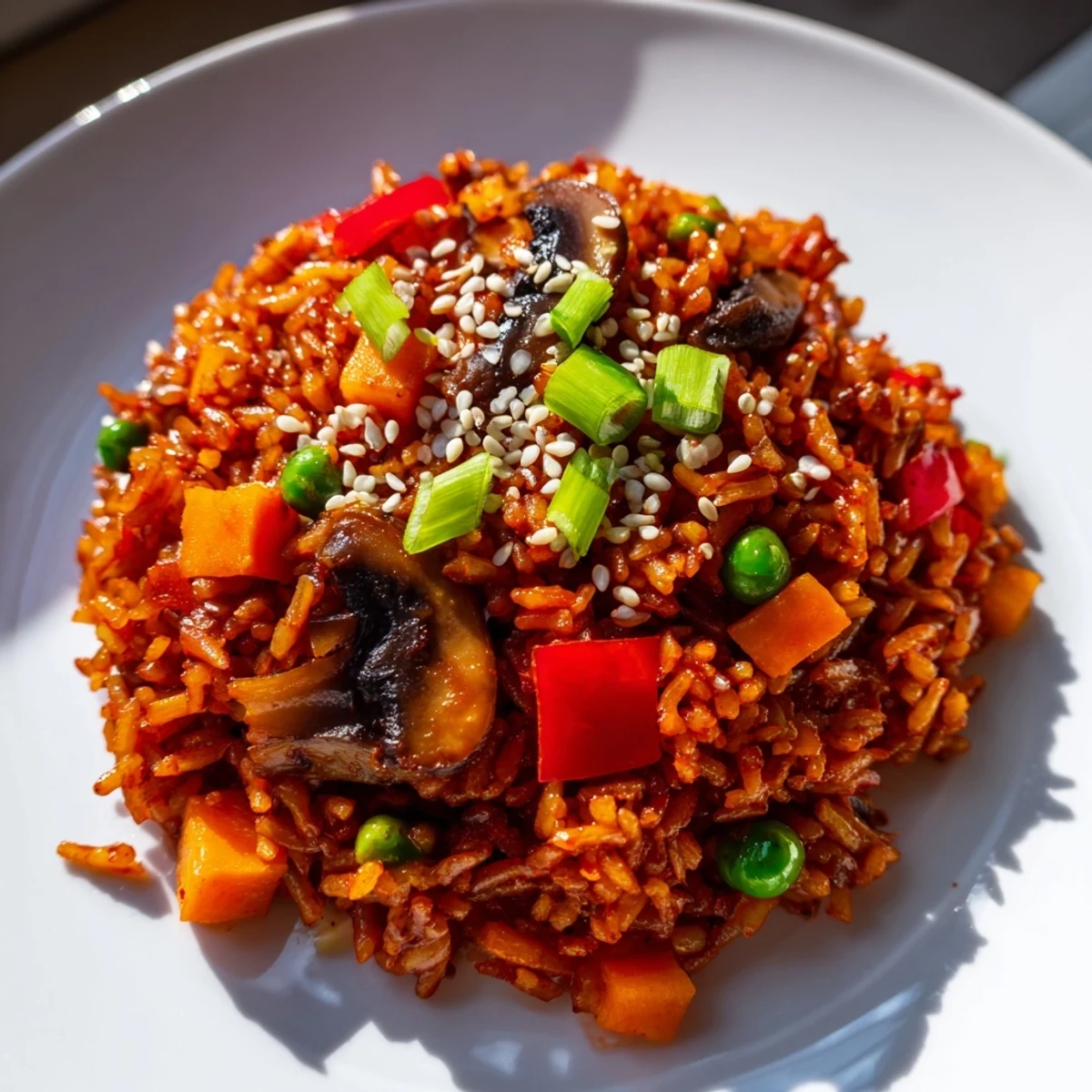
 Keep a jar of gochujang in your fridge and a batch of rice at the ready, and you will always be twenty minutes away from something extraordinary.
Recipe Questions & Answers
- → What is gochujang?
-
Gochujang is a fermented Korean chili paste made from red chili powder, glutinous rice, fermented soybeans, and salt. It adds a unique sweet, savory, and spicy flavor profile to dishes.
- → Why use day-old rice?
-
Day-old rice has dried out slightly, preventing clumping and achieving better texture during high-heat cooking. Freshly cooked rice can become mushy when stir-fried.
- → How can I add more protein?
-
Cubed baked tofu, edamame, or tempeh work perfectly. Add them during the last few minutes of cooking to heat through without overcooking.
- → Is gochujang gluten-free?
-
Traditional gochujang may contain gluten. Look for certified gluten-free versions or substitute with miso paste mixed with chili flakes and a touch of sweetness.
- → Can I adjust the spice level?
-
Absolutely. Reduce gochujang to 1-2 tablespoons for milder heat, or increase to 4 tablespoons for extra spice. Add chili flakes or sriracha if needed.
- → How long do leftovers keep?
-
Store in an airtight container in the refrigerator for up to 3 days. Reheat in a skillet over medium heat for best texture, adding a splash of water if needed.