
 Save to Pinterest
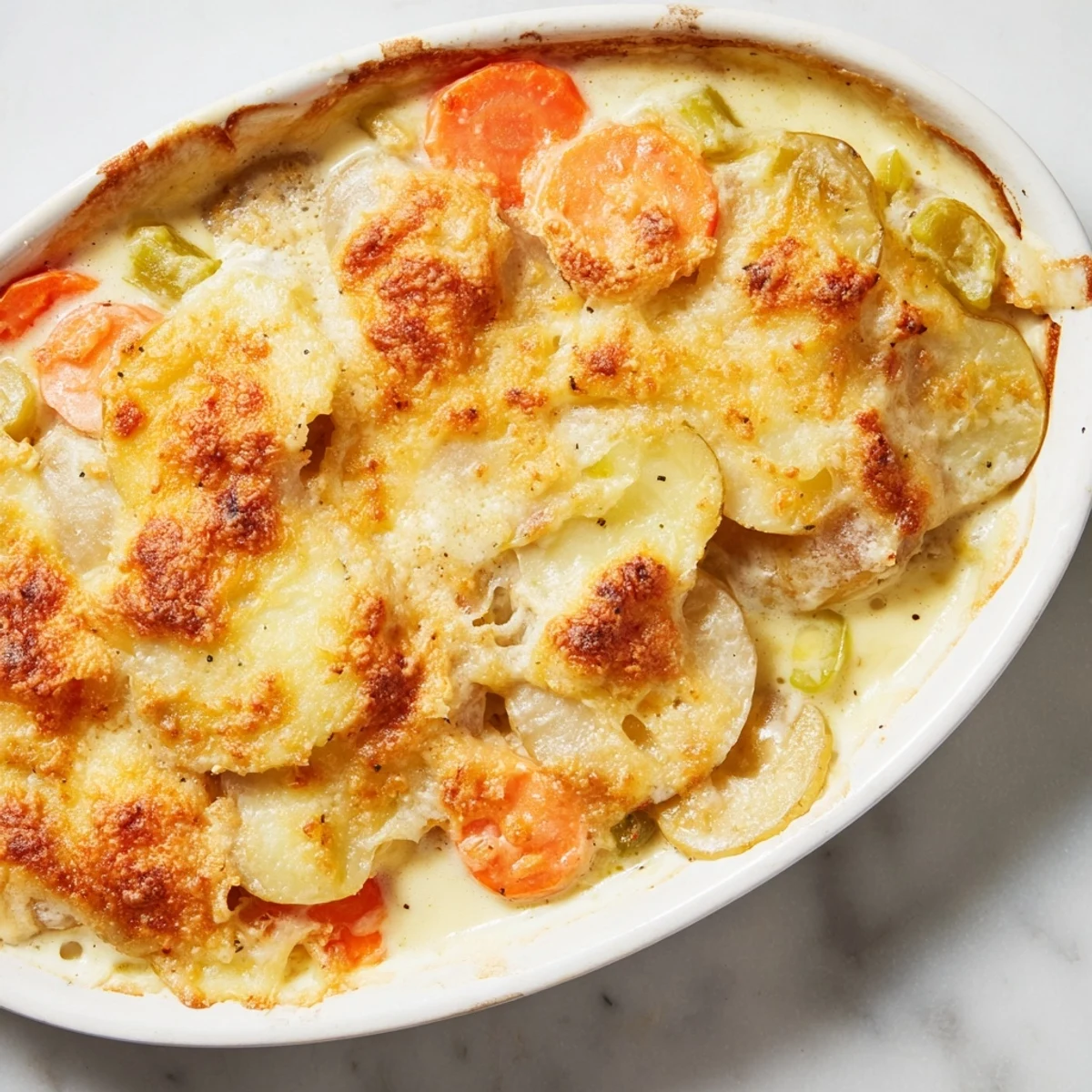
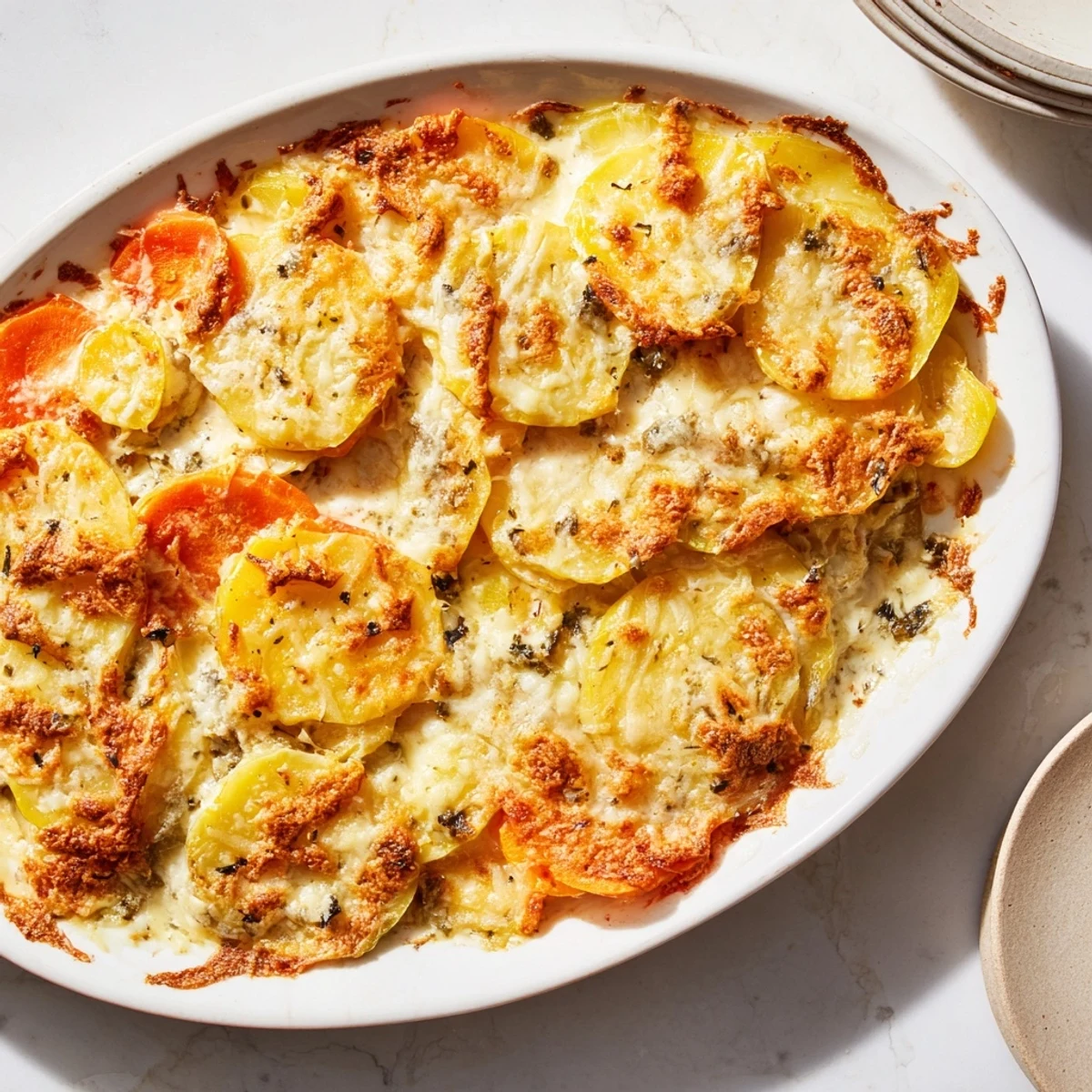
 This winter vegetable gratin blends thinly sliced Yukon Gold potatoes, carrots, rutabaga, parsnip, celery root, and leek in a rich, creamy sauce flavored with Gruyère and Parmesan cheeses. Layered and baked to perfection, it is topped with golden, buttery breadcrumbs and fresh parsley for texture and aroma. This dish offers a warm, satisfying experience with balanced seasoning including nutmeg and Dijon mustard, ideal for a hearty main course in colder months. It rests briefly before serving to enhance flavors and tenderness.
I remember discovering this gratin on a cold January evening at my grandmother's farmhouse in the Burgundy region. She pulled it from her ancient oven, golden and bubbling, and the kitchen filled with the most comforting aroma of cream, cheese, and caramelized vegetables. That single dish taught me that French comfort food isn't about complexity, it's about honoring simple ingredients and letting them shine together in warmth.
Years later, I made this gratin for my partner during our first winter together. Watching them take that first bite, eyes closing in contentment, I realized this dish had become my love language. Every time I layer those vegetables and pour the cream sauce, I'm sending a quiet message: you matter, this moment matters, let's slow down together.
Ingredients
- Yukon Gold potatoes: These waxy potatoes hold their shape beautifully during the long bake, unlike starchy varieties that turn mushy. Slice them thin and uniform so they cook evenly.
- Carrots and rutabaga: The sweetness of these roots deepens when baked slowly in cream. Rutabaga especially adds an earthy complexity that makes people ask what that mysterious flavor is.
- Parsnip and celery root: These are the secret weapons. Parsnip brings subtle sweetness, while celery root adds a sophisticated mineral note that elevates the entire dish beyond typical gratins.
- Leek: The white parts add a gentle onion flavor without overpowering. Always slice and separate the layers to rinse away any hidden soil.
- Whole milk and butter: Don't skip the quality here. Good butter and full-fat milk create a sauce that coats the vegetables like silk, not the thin, watery result you get from shortcuts.
- Gruyère and Parmesan: Gruyère melts into the sauce with deep, nutty notes, while Parmesan adds sharpness and helps the breadcrumb topping brown beautifully.
- Fresh breadcrumbs and parsley: The topping is your gratin's crown. Fresh breadcrumbs toast golden, not dark and bitter like store-bought. The parsley adds a whisper of freshness that cuts through the richness.
Instructions
- Prep with intention:
- Preheat your oven to 375°F and butter a 9x13-inch dish. This is meditation time. As you peel and slice each vegetable, think about how they'll soften and sweeten in the oven. The thinner you slice them, the more tender they'll become, so take your time with a sharp knife or mandoline.
- Mix your vegetables:
- Toss all the sliced vegetables together in a large bowl. This casual mixing actually helps distribute them evenly when you layer them, so they cook uniformly.
- Build your cream sauce:
- Melt butter in a saucepan over medium heat, then whisk in flour for exactly one minute. You're creating a roux, the foundation of a silky sauce. Gradually pour in milk while whisking constantly, keeping your wrist loose and steady. The sauce will thicken before your eyes, usually in 3 to 5 minutes. This is when magic happens.
- Season with restraint and warmth:
- Off heat, stir in the Dijon mustard for subtle tang, nutmeg for warmth that people won't identify but will feel, salt, pepper, and both cheeses. The mustard and nutmeg are your secret handshake with French cooking tradition.
- Layer like you're building something precious:
- Pour half the sauce into your buttered dish. Spread half the vegetables over it, pressing gently so they nestle in the sauce. Repeat with remaining sauce and vegetables. This layering means every bite will have creaminess and vegetables together.
- First bake with patience:
- Cover tightly with foil and bake for 35 minutes. The foil traps steam, softening the vegetables gently. Resist peeking too often, but trust the process. Your kitchen will smell increasingly wonderful.
- Make the golden topping:
- While the gratin bakes, mix fresh breadcrumbs with melted butter, Parmesan, and chopped parsley in a bowl. This is simple alchemy, turning plain breadcrumbs into something that will become irresistibly crunchy and golden.
- Finish with the crown:
- Remove foil and scatter the breadcrumb topping evenly across the surface. Return uncovered to the oven for 15 minutes, watching until the topping turns golden (not dark brown, which means burnt cheese). The vegetables should be fork-tender at this point.
- Rest before serving:
- Let it rest 10 minutes before serving. This isn't wasted time, it's essential. The gratin sets slightly, making serving clean and beautiful, and everything stays hotter longer on the plate.
 Save to Pinterest
 This gratin has taught me that the best recipes are the ones you return to, the ones that become part of your cooking vocabulary. Every winter, I make this knowing it will taste like home, like being cared for, like tradition.
Choosing Your Root Vegetables
The beauty of this gratin is its flexibility. Rutabaga can feel intimidating, but it's simply a brassica with nutty sweetness. If you can't find it or prefer something milder, turnips work beautifully. Sweet potatoes add a different kind of sweetness and cook a bit faster, so keep an eye on them. I've made this with celery root and without, and while it adds sophistication, it's not essential. What matters is that you use at least four different vegetables so flavors build in layers.
Wine Pairings and Serving Ideas
Serve this alongside a crisp Chardonnay or Sauvignon Blanc. The acidity cuts through the richness of the cream and cheese, making each bite feel lighter. For dinner, I pair it with a simple bitter green salad dressed with lemon vinaigrette and a warm crusty bread to soak up every bit of sauce. It's also remarkable cold the next day, sliced and warmed gently in a low oven.
Make It Your Own
Once you understand the ratio of vegetables to sauce, you can improvise. A minced garlic clove stirred into the sauce adds depth. A pinch of thyme whispers through everything. Some people finish with a shower of fresh chives instead of parsley. The foundation is strong enough to handle your creativity.
- Prepare vegetables up to 4 hours ahead and store them in a bowl with a damp towel covering them
- Make the sauce earlier in the day and reheat gently before assembling, stirring to smooth out any lumps
- Assemble the entire gratin in the morning and bake it just before dinner for the best timing
 Save to Pinterest
 This winter vegetable gratin is proof that the most memorable meals come from simple ingredients treated with care and intention. Make it for people you love, watch their faces as they taste it, and you'll understand why I keep coming back to it year after year.
Recipe Questions & Answers
- → What vegetables are used in this gratin?
-
It includes Yukon Gold potatoes, carrots, rutabaga, parsnip, celery root, and leek thinly sliced for even cooking.
- → How is the sauce prepared?
-
A creamy sauce is made by melting butter, whisking in flour, gradually adding milk, then seasoning with Dijon mustard, nutmeg, salt, pepper, Gruyère, and Parmesan cheese.
- → What temperature and duration is ideal for baking?
-
The gratin bakes covered at 375°F (190°C) for 35 minutes, then uncovered with breadcrumb topping for an additional 15 minutes.
- → Can the breadcrumbs be flavored?
-
Yes, the topping includes breadcrumbs mixed with melted butter, Parmesan cheese, and chopped fresh parsley to add richness and sparkle.
- → Are there ingredient substitutions suggested?
-
Sweet potatoes or turnips can replace root vegetables; adding minced garlic to the sauce enhances flavor.
- → What kitchen tools are recommended?
-
A chef’s knife or mandoline for slicing, mixing bowl, saucepan, whisk, baking dish, and foil are suggested for preparation.